Go Forward, Together: Founding School Leaders Back afiDE Ghana’s Member-Led Network

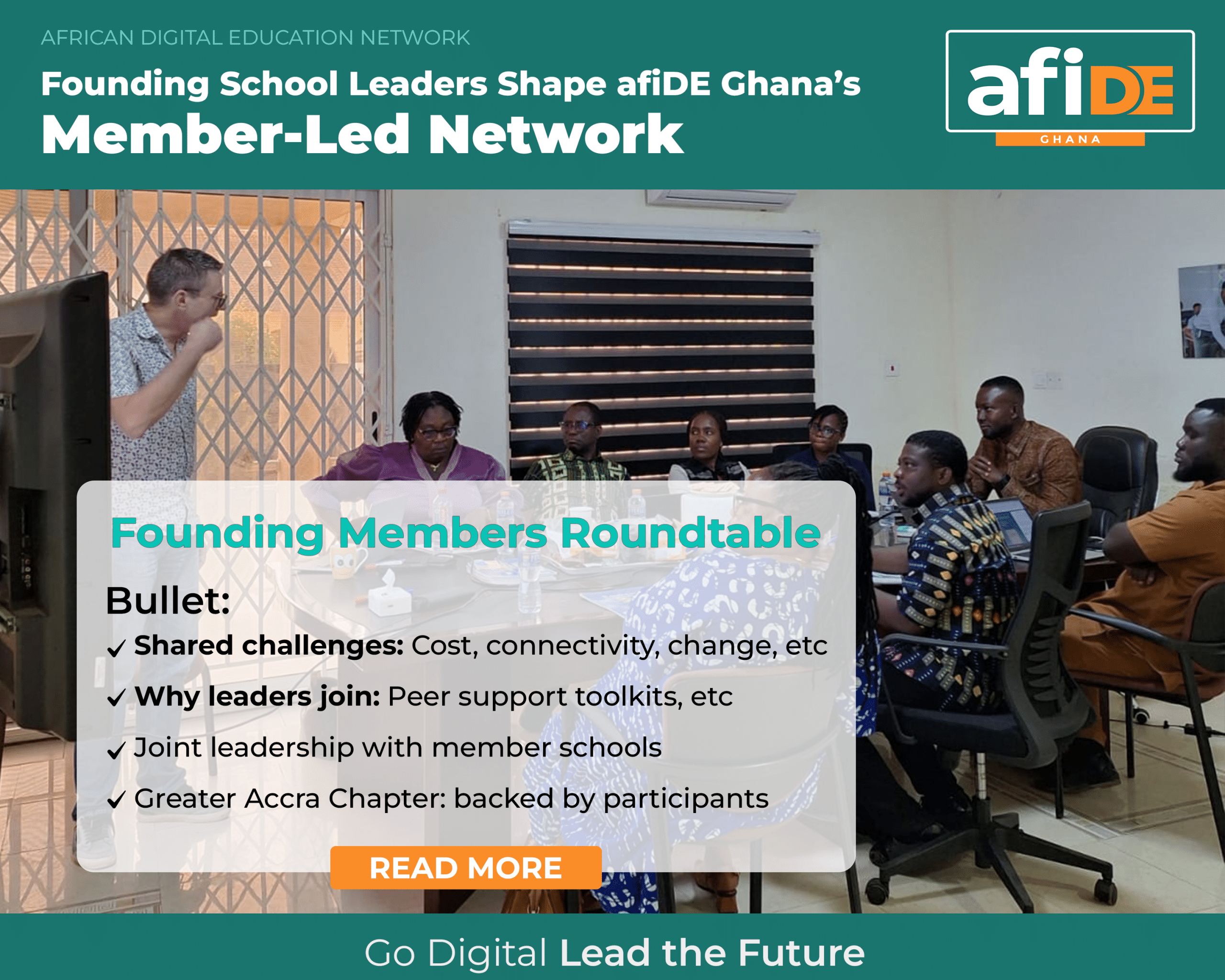
Founding School Leaders endorse a Greater Accra Chapter ahead of afiDE Ghana's forum for all Member Schools on 27 November.
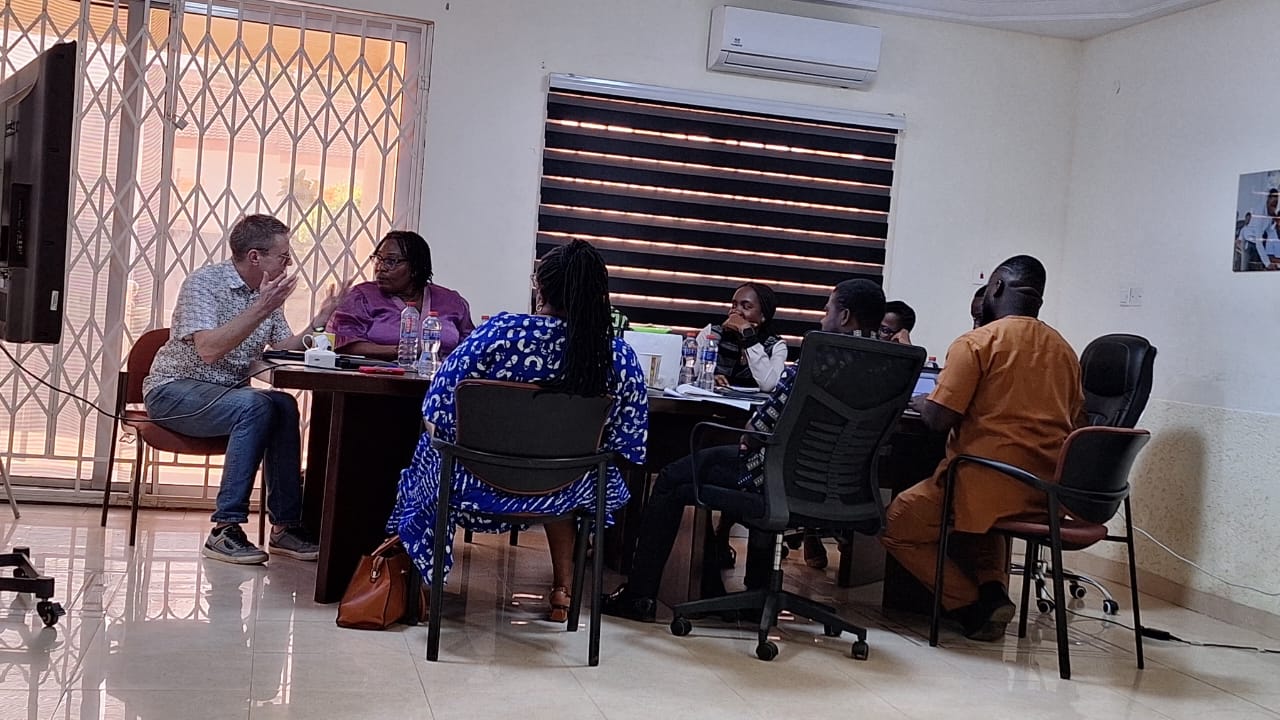
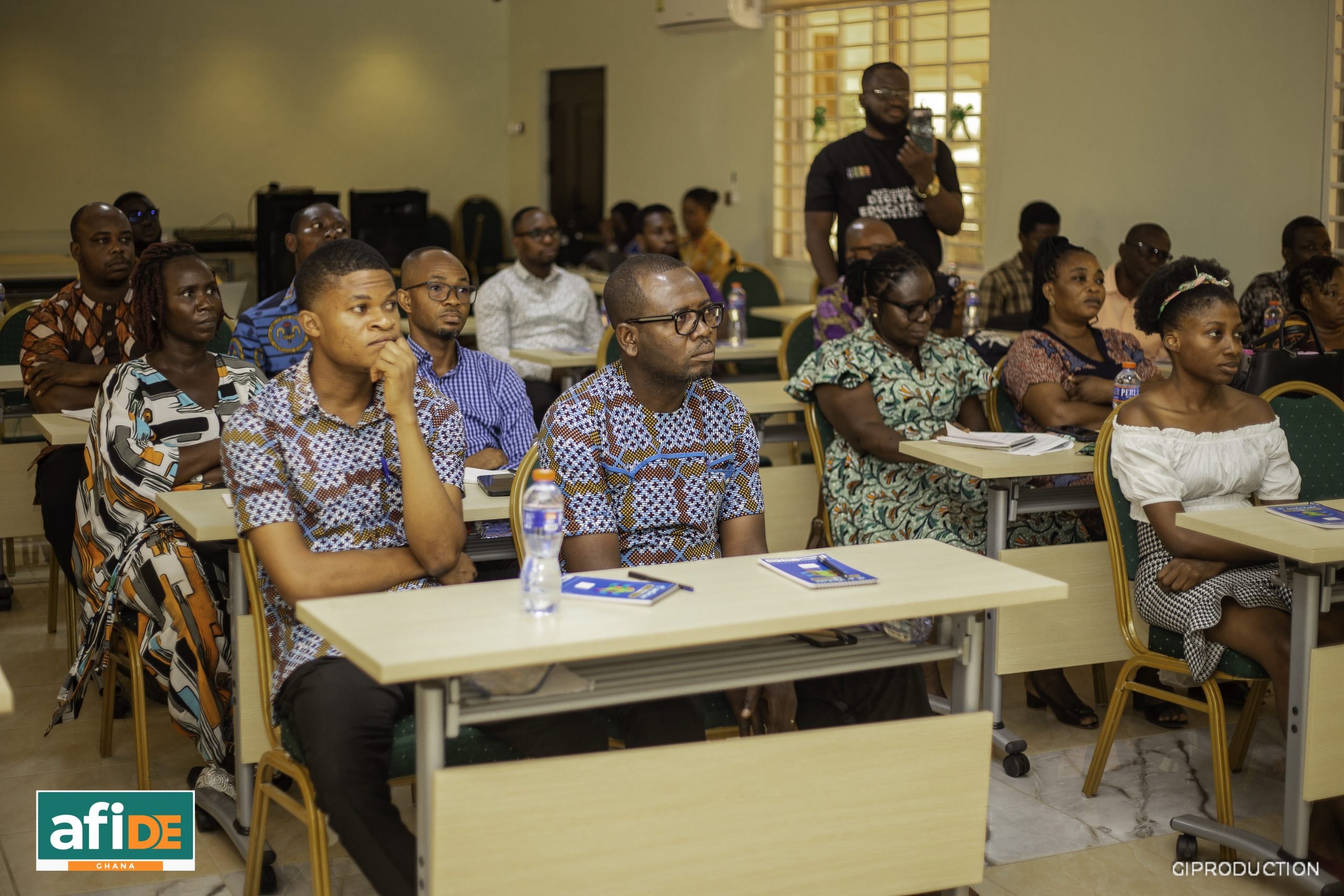
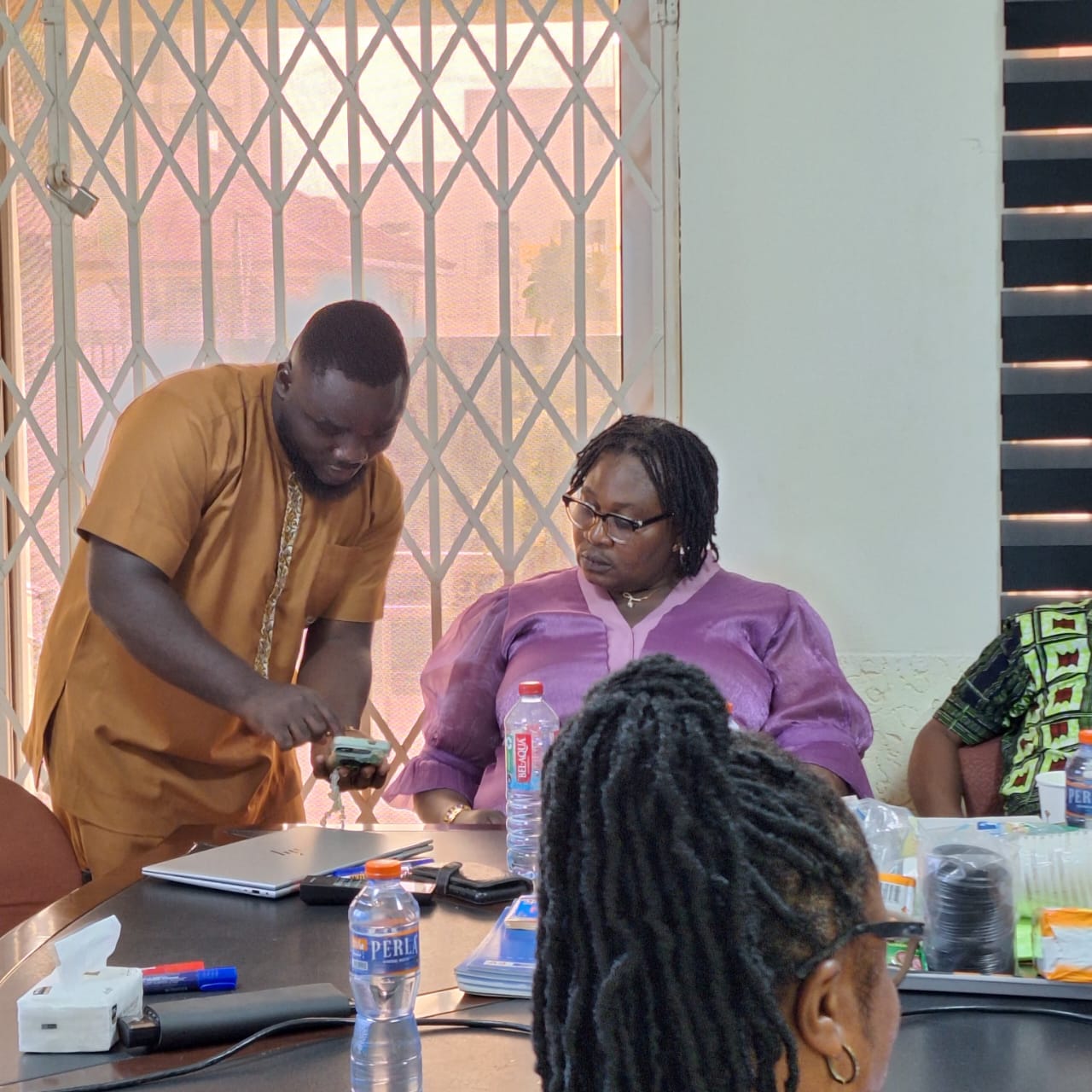
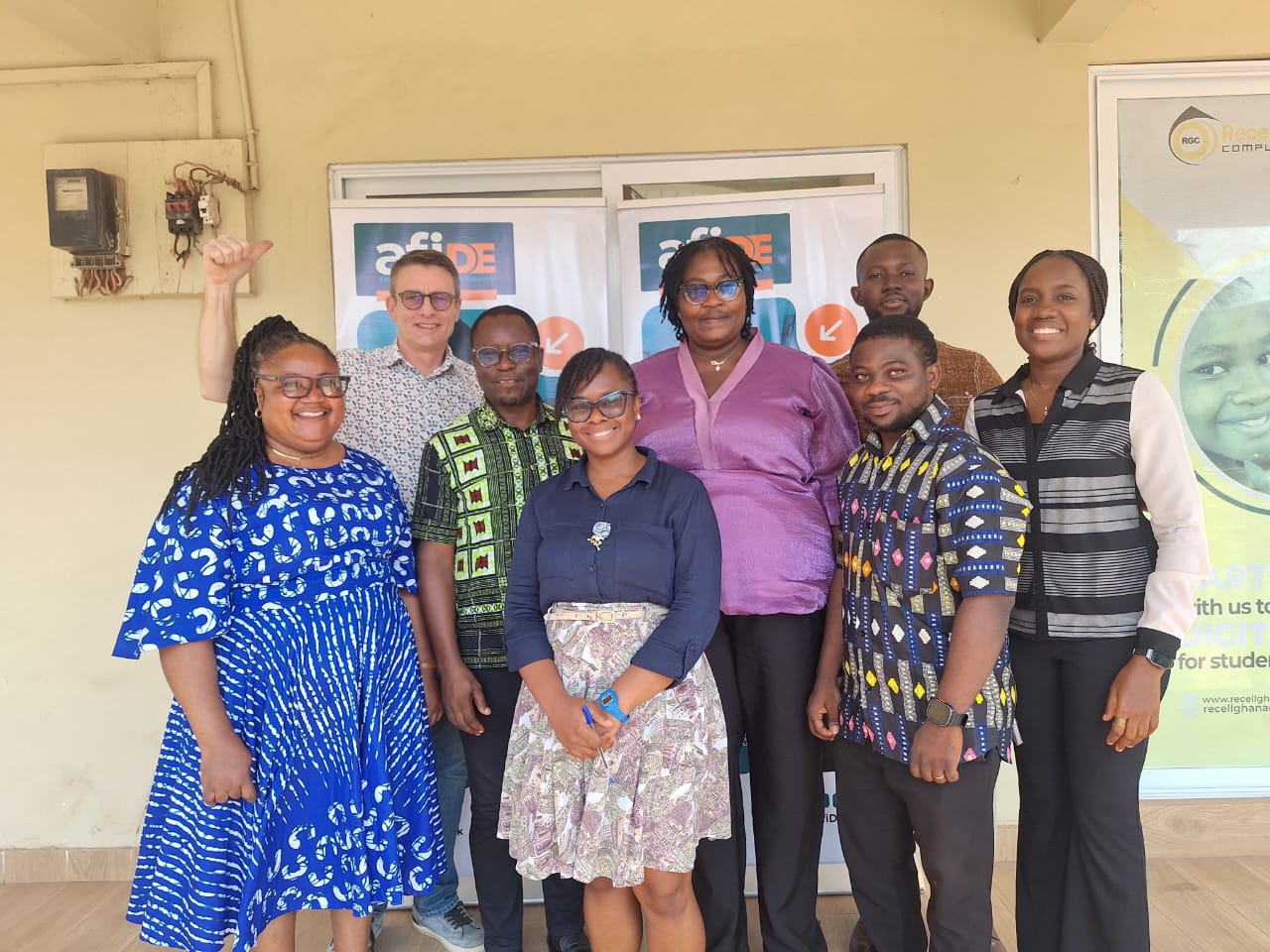
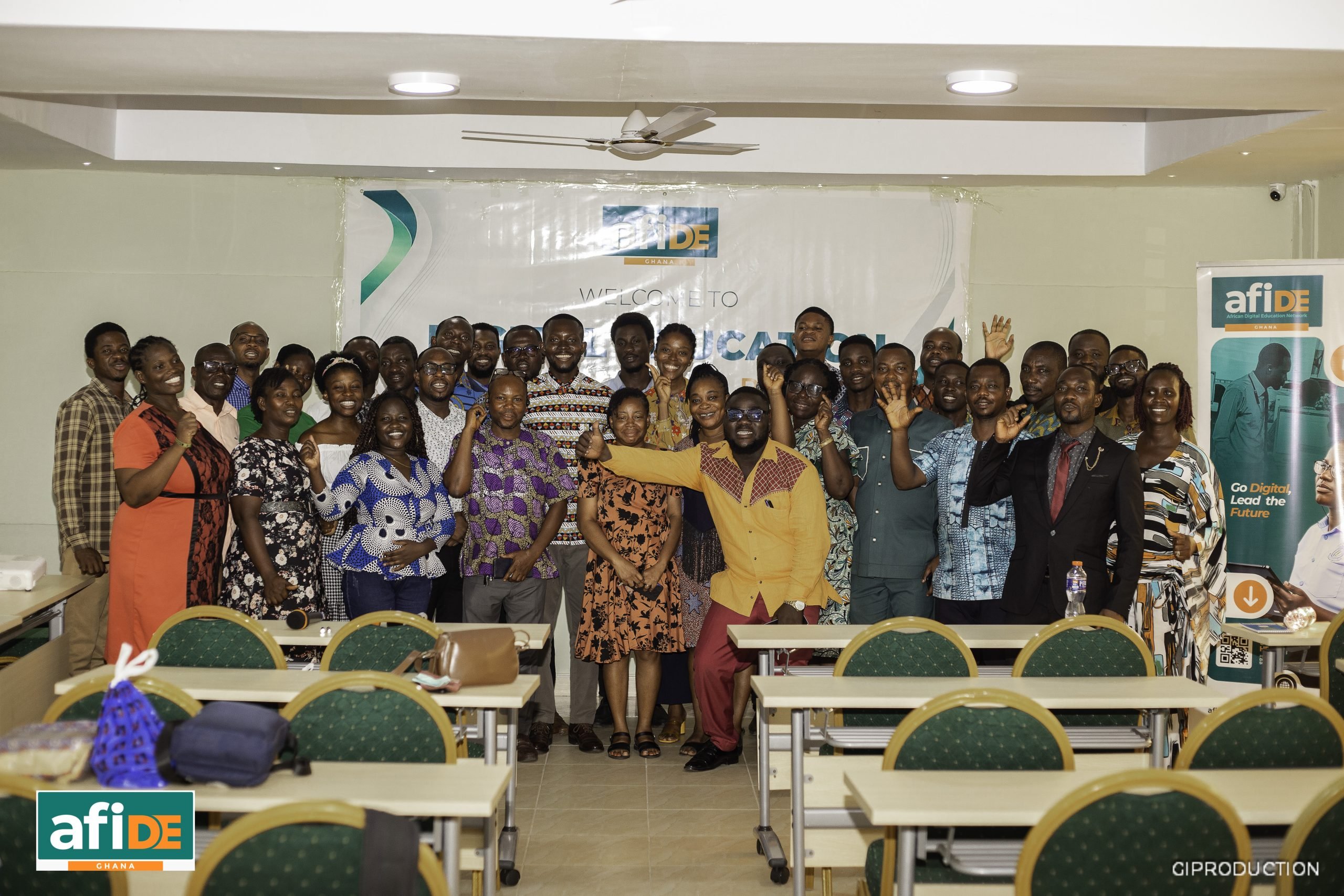
Five Founding School Leaders from afiDE Ghana member schools have endorsed plans to establish a member-led network and support the creation of a Greater Accra Chapter, following a roundtable discussion held at the afiDE Ghana office in Adjiringanor, Accra, on 19 November 2026.

The meeting, held under the theme “Shaping the Future Together: Building a Member-Led Network for Digital Education,” brought together school leaders to discuss the opportunities, challenges, and governance structures needed to strengthen collaboration among schools advancing digital education in Ghana.

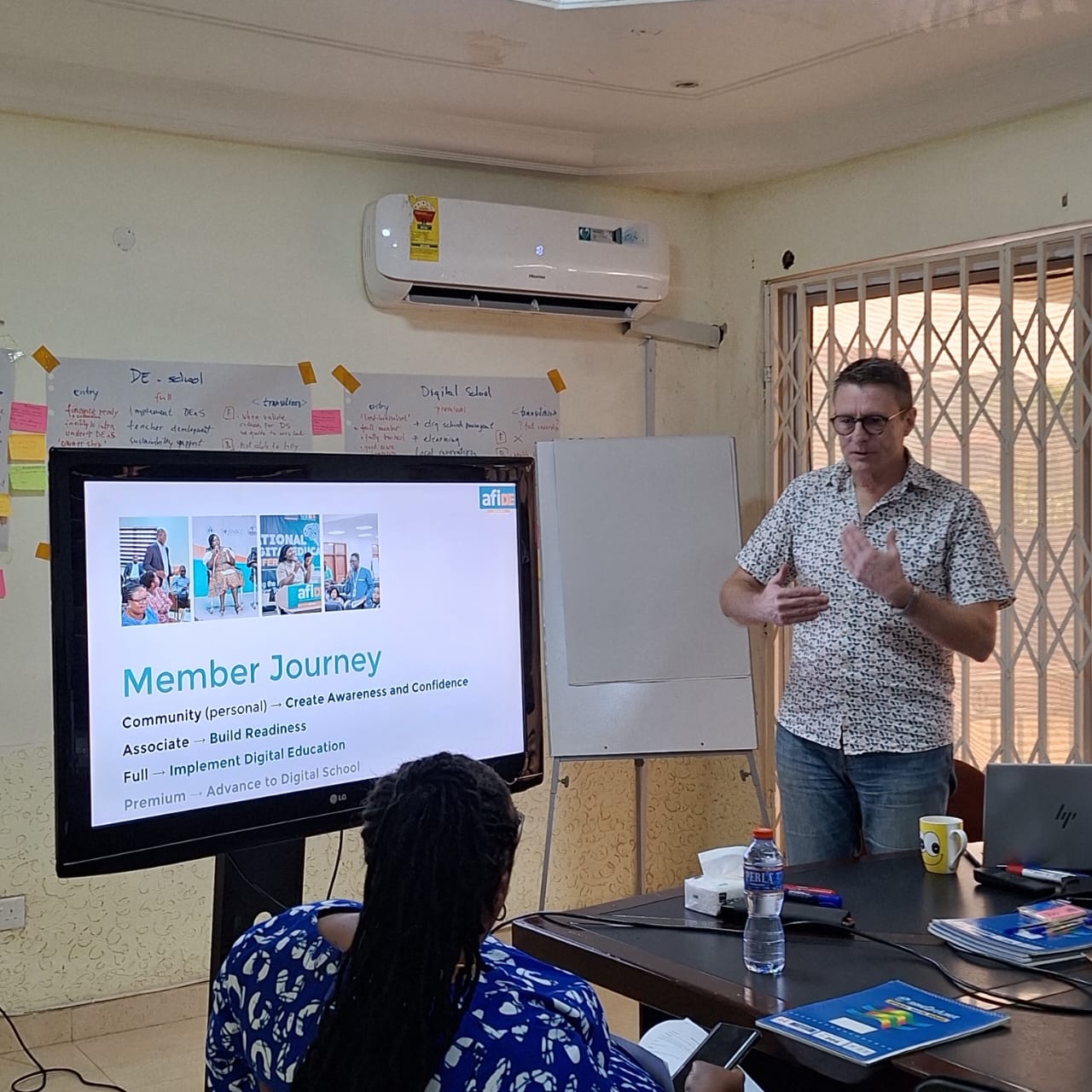
Opening the session, Eric Kwesi Oppong, General Manager of afiDE Ghana, welcomed participants and outlined the objectives of the roundtable. This was followed by a presentation from Pim, co-founder of afiDE Ghana, who shared the vision for a member-led network built around regional chapters feeding into a national network for collaboration, innovation, and collective problem-solving.

Common Challenges Require Collective Solutions

Throughout the discussions, school leaders identified several challenges affecting the implementation of digital education in their schools and in Ghana at large. Chief among these were the high cost of technology, unreliable internet connectivity, infrastructure limitations, and resistance to organisational change.


Participants noted that while many schools are eager to integrate technology into teaching and learning, the costs associated with devices, software, connectivity, technical support, and equipment replacement remain significant barriers.


They also emphasised the need for ongoing teacher training, stronger stakeholder buy-in, and greater awareness of the value of digital education. When discussing challenges that are particularly difficult to address individually, participants again pointed to technology costs, connectivity issues, infrastructure needs, and change management.


School leaders called for stronger collaboration among schools, improved national connectivity infrastructure, favourable tax policies for educational technology, and greater support from Parent-Teacher Associations. Several participants stressed the importance of a collective platform that can amplify schools’ voices and help reduce the burden of implementing digital education initiatives independently.
What School Leaders Want from the Network

Participants were unanimous about the value they hope to gain from the proposed member-led network.

Professional development opportunities, access to peer expertise, and practical insights on successful technology and teaching models emerged as key motivations for joining.

To sustain participation, school leaders recommended:

  • Visible and measurable results within the first six to twelve months, including cost savings and improved student engagement.
  • Quarterly in-person meetings and monthly virtual discussions.
  • More locally organised workshops and conferences.
  • Professional development opportunities and exchange visits for teachers and ICT coordinators, not only school leaders.
  • Recognition and celebration of schools demonstrating excellence and innovation.

Building a Network Led by Its Members

Discussions also explored the responsibilities and governance structures required to ensure the network’s long-term success.

Participants agreed that members should actively contribute by attending meetings, sharing experiences and resources, participating in joint projects, and supporting peer mentorship initiatives.

On leadership, school leaders favoured a shared governance model involving both afiDE Ghana and member schools. They proposed fixed leadership terms, accountability mechanisms, clearly defined by-laws, and agreed performance indicators to measure progress. Participants also emphasised the importance of consensus-building and ensuring every member school has an equal opportunity to contribute to decision-making.

Strong Support for a Greater Accra Chapter

A significant outcome of the roundtable was the strong endorsement for establishing the afiDE Ghana Greater Accra Chapter.


Every participant who responded expressed interest in helping establish the chapter, while those consulted indicated their willingness to serve as Founding School Leaders.


Participants proposed several priorities for the chapter’s first six months, including:

  • Sensitising schools across Greater Accra about the member-led network.
  • Officially launching and inaugurating the chapter.
  • Developing governance by-laws and establishing regular meetings.
  • Conducting goal-setting sessions and assessing the current state of digital education.
  • Organising joint training programmes and peer learning visits.
  • Reporting progress to NaCCA and the Ghana Education Service.
  • Initiating three collaborative projects: a shared digital resource repository, school sustainability programme, and digital readiness assessment framework.
Looking Ahead: The Member School Leaders Forum

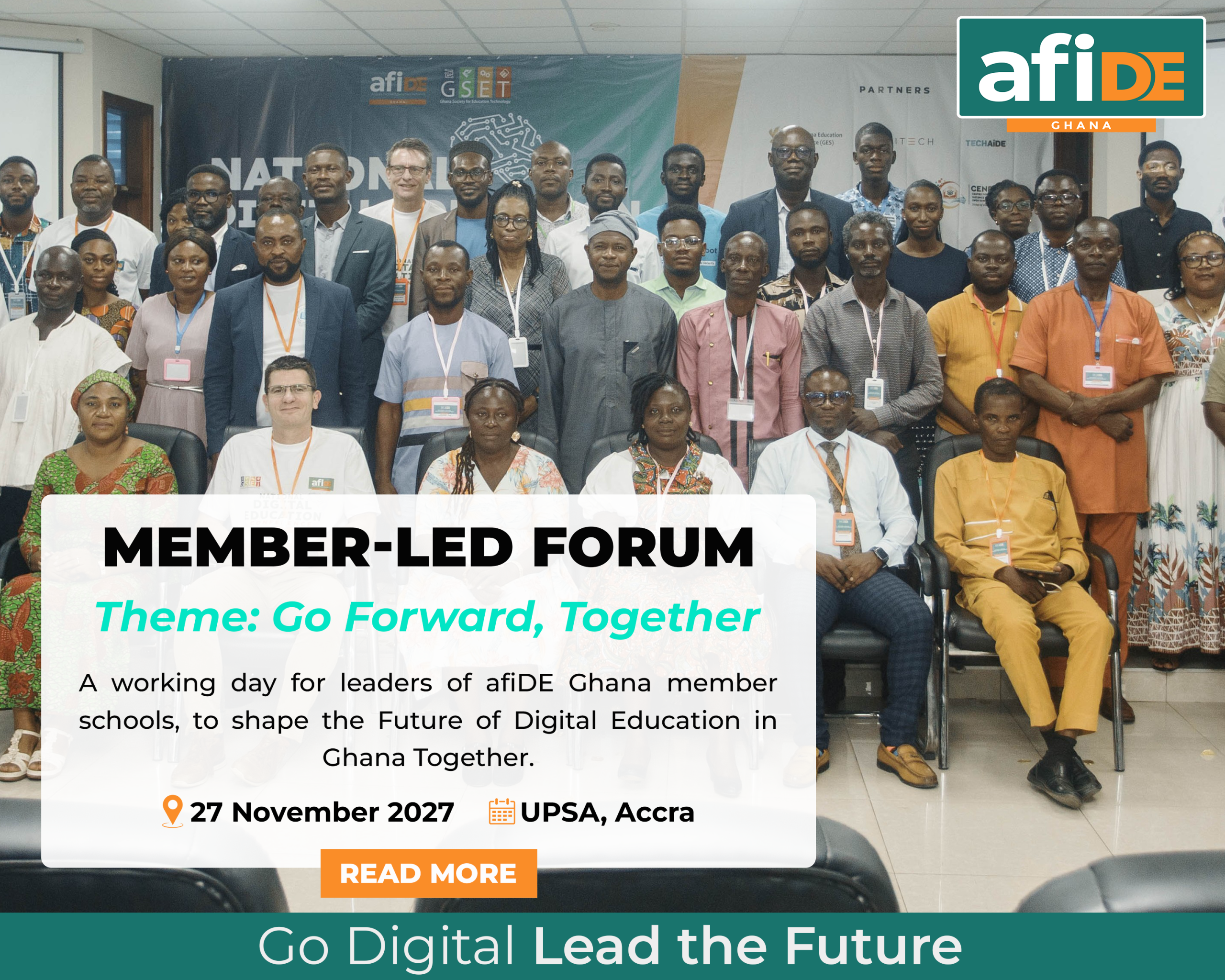
The roundtable serves as a precursor to afiDE Ghana’s broader Member School Leaders Forum, scheduled for 27 November 2026 at the Kofi Ohene-Konadu Auditorium, University of Professional Studies, Accra (UPSA), under the theme “Go Forward, Together.”

The one-day working forum will bring together leaders from all afiDE Ghana member schools to discuss shared challenges, reflect on the state of the network, engage directly with afiDE Ghana leadership, and contribute to conversations around the organisation’s evolving identity and future direction.

The forum will also feature three collaborative workshops: Collective Wisdom, Community, and Brave Builders.

As afiDE Ghana prepares for the gathering, the message emerging from the Founding School Leaders Roundtable is clear: the future of digital education in Ghana will be strongest when schools move forward together.

Read the full details of the forum here: afiDE Ghana Invites Member School Leaders to Shape the Future of Sustainable Digital Education in Ghana
afiDE Ghana Invites Member School Leaders to Shape the Future of Sustainable Digital Education in Ghana
afiDE Ghana, a champion of sustainable digital education in Ghana, is inviting the leaders of its member schools to a one-day working forum on 27 November 2026 at Kofi Ohene-Konadu Auditorium, University of Professional Studies(UPSA), under the theme “Go Forward, Together.” Leaders will help decide what the network becomes next.

The day starts with school leaders on stage. A panel will discuss the biggest challenges leaders face today and how they can be stronger together, so that no one faces them alone. A session on the state of the network will look at what afiDE Ghana has learned from its members, what is changing and what remains constant, and why learning from one another matters in a network led by its members. Participants will also have the chance to put their questions directly to the General Manager.

Leaders will also join a discussion on afiDE Ghana’s brand identity. Member schools will share their input on how the identity is evolving and whether it truly reflects them, with an animation offering a first look at the direction.

In three workshops, leaders will work on shared challenges and solutions (Collective Wisdom), what makes membership worthwhile (Community), and what members should own (Brave Builders).

afiDE Ghana is not bringing a finished plan. It is bringing questions, and it wants its member school leaders to answer them. afiDE Ghana believes digital education lasts only when schools lead it. That is why its member schools do not just receive computer labs. They get internet connectivity, maintenance, teacher training and leadership development, so the technology keeps serving learners year after year. Now the network wants its leaders to take ownership of it.

afiDE Ghana is the Ghana chapter of the African Digital Education Network, a member-led network of ambitious schools preparing learners for the 21st century. It unites forward-looking school leaders who believe effective digital education needs leadership, collaboration and local ownership.

Its Digital Education as a Service model takes the burden of owning a computer lab off schools. There is no upfront investment, and each school gets 21 workstations, 24/7 internet, teacher training, maintenance and replacement, a Leadership Academy and a help desk. Member schools range from basic schools to senior high schools, colleges of education and vocational institutes.

The network does not work alone. It collaborates with 1A Computerlabs, the Ghana Education Service, CENDLOS, TechAide, Node8, SchoolRobot, AmaliTech, Kevi Kess and many more partners who share its commitment to sustainable, school-led digital transformation across Ghana.

Is your school ready to lead in digital education? Visit afide.network to explore the network, meet its member schools and apply to join

Ho School Leaders Take the Learner’s Seat as Digital Education Week Opens

School leaders in Ho spent Wednesday, 11 November 2026, experiencing digital education from a learner’s perspective as Ho Digital Education Week officially opened at Dora Memorial School under the theme, “Volta Region Leads: Educators at the Forefront of Sustainable Education.”

The Principal of Dora Memorial School, Mr. Michael Owusu, welcomed participants and formally opened the event. In his remarks, he acknowledged the Ho Municipal Education Directorate and the organisations supporting the Digital Education Week initiative.

Speaking on behalf of afiDE Ghana, General Manager Eric Kwesi Oppong outlined the organisation’s vision of empowering schools for the digital age. He emphasised afiDE Ghana’s strategy for the Volta Region and explained what membership in the afiDE network offers schools seeking to strengthen their digital education capacity. Representatives of the HO Municipal Education Directorate and invited education stakeholders also delivered remarks in support of the initiative.

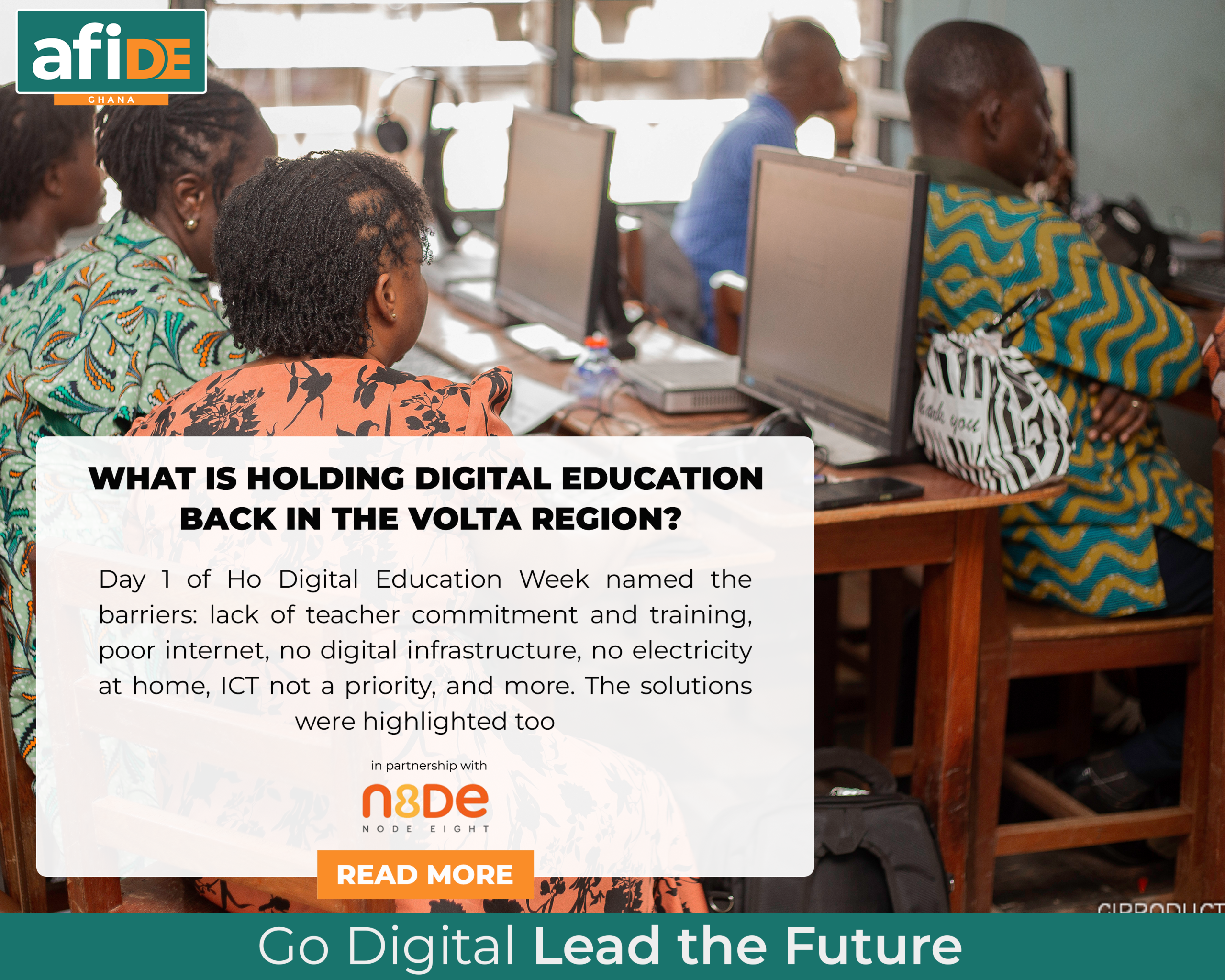
A key feature of the opening day was a panel discussion exploring the central question of the week: Why is digital education failing in public schools across the Volta Region? The discussion brought together officials from the Ghana Education Service (GES), school leaders, and teachers, with contributions from education partners including NaCCA and NODE8.

Participants identified several barriers to effective digital education implementation, including limited teacher commitment, inadequate training opportunities, poor internet connectivity, insufficient digital infrastructure, unreliable access to electricity in many homes, and the low prioritisation of ICT by key stakeholders.

Following the discussion, each participating school completed a digital readiness assessment covering ICT infrastructure, learning spaces, internet connectivity, student enrolment figures, and levels of interest in digital education.

The assessment was followed by a practical training session led by Emmanuel Sefadzi, Digital Education Trainer for afiDE Ghana. The session included a live demonstration of afiDE’s Digital Education as a Service (DEaaS) model, providing participants with a first-hand understanding of the support schools receive and how the model operates. School leaders also gained hands-on experience using the computers and digital learning tools.

In the afternoon, participants stepped fully into the role of learners by taking part in a digital lesson simulation and collaborative problem-solving exercises. The experience encouraged school leaders to reflect on how digital learning could transform teaching and learning in their own classrooms.

The day concluded with each school head developing a “My School in 90 Days” action plan, outlining one priority action, one designated champion, one anticipated challenge, and one area of support requested from afiDE Ghana and NODE8. These commitments will be reviewed through follow-up engagements at both the 30-day and 90-day milestones.

Digital Education Week continues on Thursday, 12 November, with teachers and ICT coordinators participating in practical capacity-building sessions. Activities will include a NODE8-led session on responsible technology use and an introduction to Jesi AI, a Ghana-developed teaching assistant designed to support classroom delivery. Participants will receive certificates of participation upon completion.

About afiDE Ghana

African Digital Education Network (afiDE) Ghana is building a nationwide Digital Education Network that empowers schools to lead their own digital transformation journeys. Through its Digital Education as a Service (DEaaS) model, schools receive fully equipped Digital Education Labs, training for teachers and school leaders, and ongoing technical and operational support to ensure sustainable implementation and impact.

afiDE Ghana and Node8 Bring Digital Education Week to Ho, Putting Volta Region Schools on the Path to the Digital Age

afiDE Ghana and Node8 Bring Digital Education Week to Ho, Putting Volta Region Schools on the Path to the Digital Age

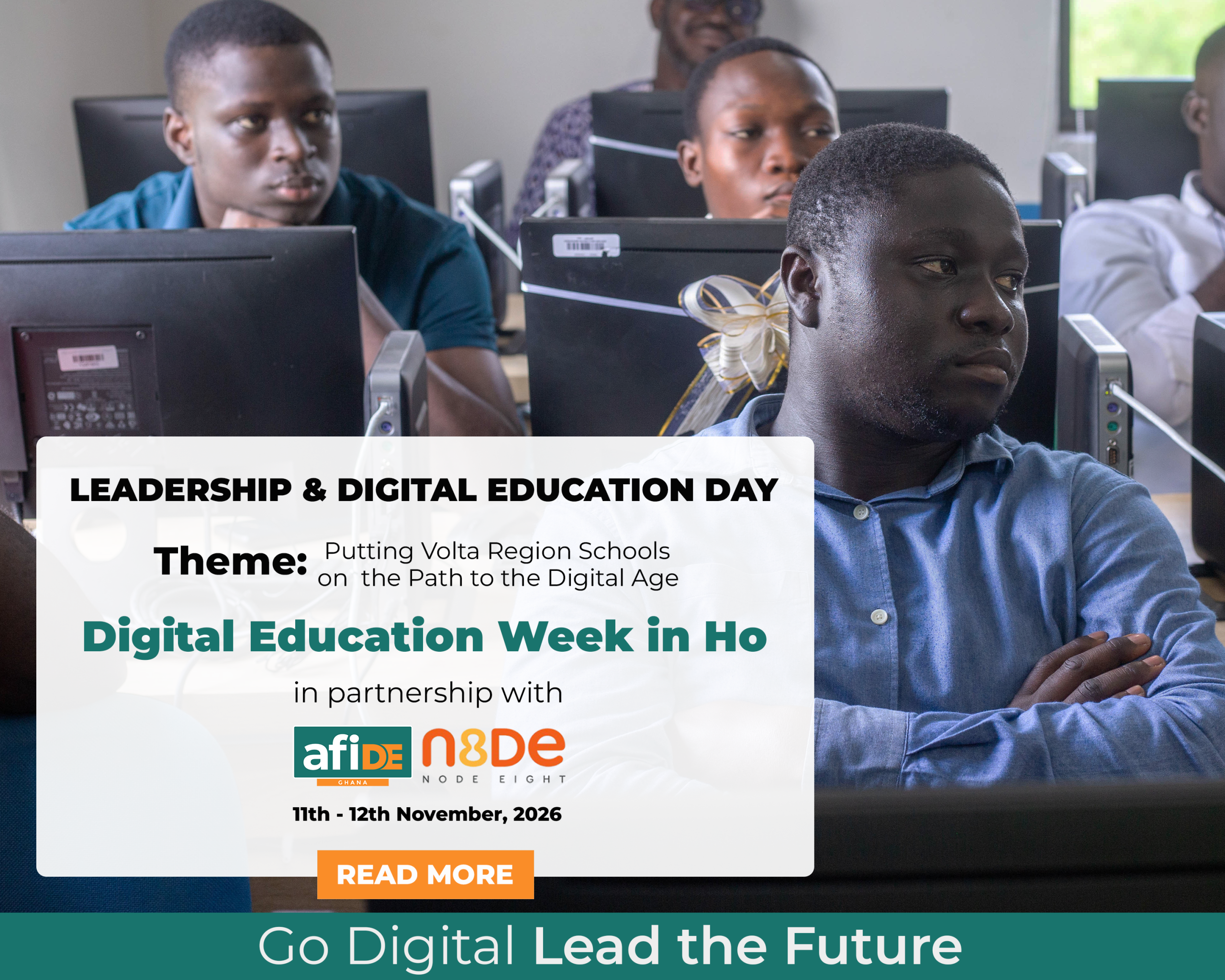
afiDE Ghana, the digital education catalyst for schools across Ghana, will host Ho Digital Education Week with partner Node8 on Wednesday 11 and Thursday 12 November 2026 at the Dora Memorial School Campus in Ho, Volta Region

The two day programme brings school leaders, teachers and education officials together to answer a practical question: what is holding back digital education in the Volta Region, and what can schools do about it now. Also, school leaders and teachers will experience digital learning, assess their readiness and plan their next steps

Day 1, Wednesday 11 November: Leaders Learn From the Learner’s Seat

Heads of public and private schools, the Ho Municipal Education Directorate and other education stakeholders will take part in a guided experience session in the digital lab. They will learn as students would, working through a digital lesson simulation and collaborative problem solving before reflecting on what it means for teaching. A panel of school heads, teachers and Municipal Education Directorate officials will then discuss the barriers to digital education in Ho and the urgency for action.

Participants will also see a live demonstration of afiDE’s Digital Education as a Service (DEaS) model. It shows school leaders what their school receives, from infrastructure to ongoing support, and how it works every day. Each school will complete a digital readiness assessment covering ICT infrastructure, space, connectivity, student numbers and interest level.

Every school head will also map out a “My School in 90 Days” plan with one action, one champion, one obstacle and one ask of afiDE and Node8. Those plans will be followed up at 30 days and 90 days. Decision makers will leave with an information pack covering lab configuration, pricing, service model, maintenance and support.

Day 2, Thursday 12 November: Teachers Take the Lead

Teachers and ICT coordinators will take part in practical training, including a Node8 led session on responsible technology and an introduction to Jesi AI, showing how AI tools can support teaching and learning when used responsibly. Participants will receive certificates of participation.

Ho teachers will not be starting from scratch. In July 2025, more than 200 basic and junior high school teachers in the Ho Municipality took part in a two day “AI for Teachers” workshop organised by Jesi AI with Node Eight, the Ghana Education Service and the Ho Municipal Directorate. Jesi AI is a Ghana developed teaching assistant aligned with the national curriculum, built to complement teachers, not replace them.

The week targets 30 participants: 10 school heads and proprietors, 14 teachers and ICT coordinators, 3 officials from the Ho Municipal Education Directorate, and 3 other education partners.

Digital education in Ghana will not be delivered by devices alone, It needs school leaders who are ready, teachers who are confident, and a service model that keeps labs working long after the launch. Ho Digital Education Week brings all three together.

The timing is significant. Ghana’s Education Minister has said a review team is working towards a national digital education policy, while access to digital learning remains uneven across the country. Rather than ending as a single event, the programme leaves each school with a readiness profile, a 90 day plan and a clear path to adoption. That reflects afiDE’s approach of strengthening digital education in Ghana through infrastructure, training and sustained support.

Background: Digital Education Week in the Eastern Region

Ho follows the Eastern Region Digital Education Week, which afiDE Ghana organised in June 2026 with the Ghana Society for Education Technology (GSET), Amalitech and regional partner Kevi Kess. The week opened in Koforidua with the launch of the Teacher Experience Centre, the first facility of its kind in Ghana. Students then took part in a Coding for Kids competition at King Jesus School, while student teachers began afiDE’s Bronze Training at Presbyterian Women’s College of Education in Aburi. The week closed in Aburi with certificates for the student teachers and a new collaboration with GSET to turn the national College of Education curriculum into practical digital teaching approaches.

About afiDE Ghana

afiDE Ghana is building a nationwide, member based Digital Education Network that supports schools to lead their own digital transformation. Through its Digital Education as a Service model, schools receive fully functional Digital Education Labs, teacher and school leadership training, and continuous technical and operational support. afiDE hosted the National Digital Education Conference 2025 with the Ghana Society for Education Technology.

About Node8

Node8 is a venture studio and innovation hub based in Ho and the home of Jesi AI. Established in 2017, it has worked with partners including GIZ, MEST Africa, Ho Technical University and UNICEF. It is a partner of afiDE Ghana and facilitates the responsible technology and Jesi AI sessions.


Brianna’s Leadership Story: From Startup Leader to Director: A Journey of Building People, Services and Growth

From Startup Leader to Director: A Journey of Building People, Services and Growth

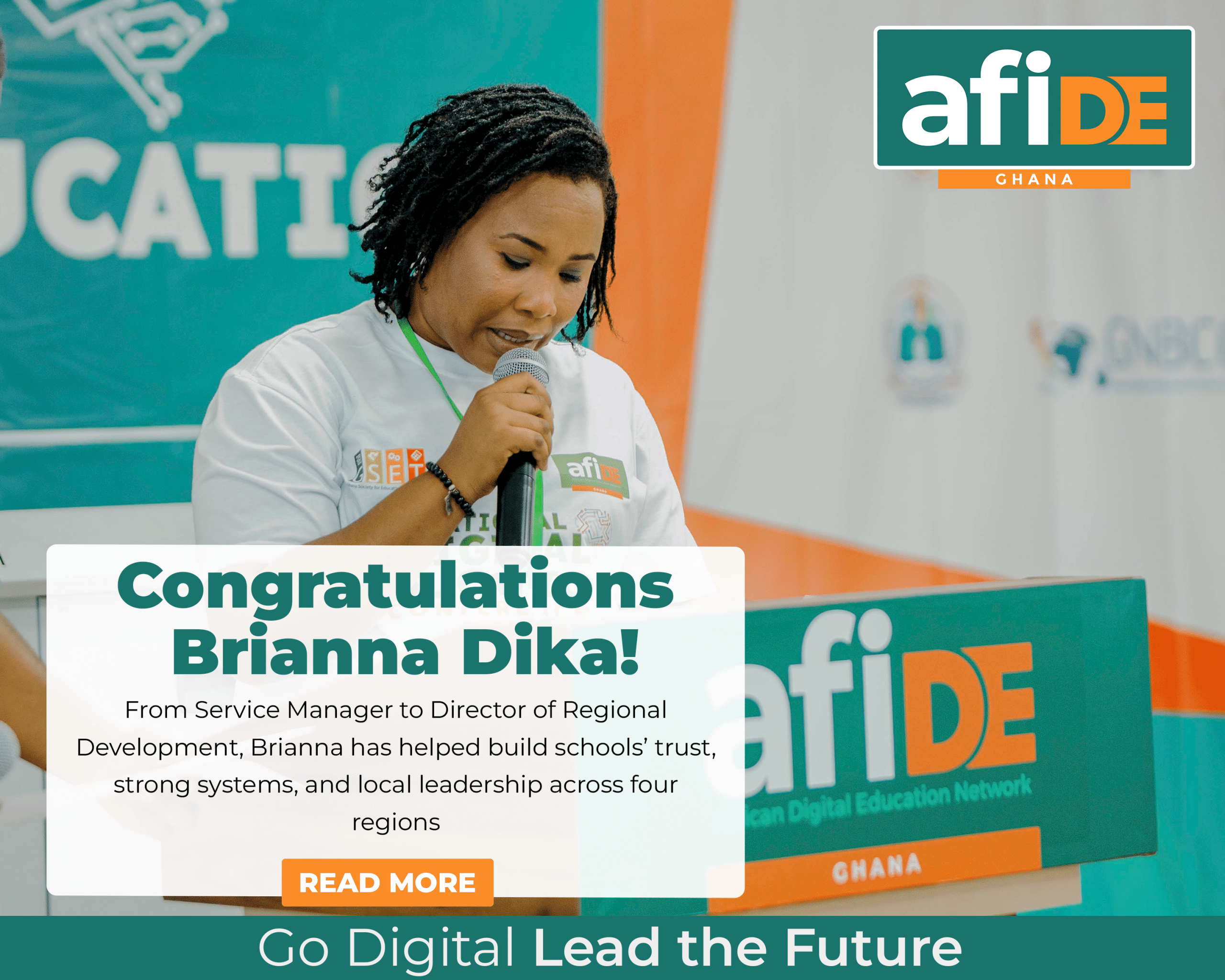
When afiDE Ghana recruited its first team member several years ago, the organisation was still in its startup phase. From a pool of seven candidates, Brianna Dika stood out not because of the strongest academic credentials or the most impressive CV, but because she demonstrated something equally important: the ability to turn ideas into action and connect naturally with people.

As Startup Leader, Brianna became one of the driving forces behind transforming afiDE’s vision into day-to-day reality. She helped build relationships with more than 50 schools, supported Sustainable Digital Education service delivery, and contributed to establishing the operational foundations needed for long-term impact.

Building Digital Education Services and Systems

As the organisation grew, so did her responsibilities. Brianna took on leadership of Service Management at a critical moment in afiDE’s development. Her mandate extended beyond managing operations. She was tasked with helping the organisation become less dependent on individual leaders by strengthening systems, structures and people.

As afiDE Ghana matured, Brianna increasingly focused on building organisational capacity rather than carrying operational responsibilities herself. By strengthening systems, supporting colleagues such as Nicole Odudu and Zita Nyarko, and contributing to the recruitment and successful onboarding of General Manager Eric Kwesi Oppong, she helped lay the foundations for afiDE’s next chapter: a member-based organisation in which school leaders themselves play a central role in shaping its future.

One of her most significant contributions has been helping afiDE transition from a founder-led startup towards a stronger Ghanaian leadership structure.

Through developing people, strengthening systems, and progressively transferring responsibility, she helped create the conditions for a locally led management team capable of guiding the organisation’s next phase of development.

Strengthening afiDE’s Regional Presence

At the same time, Brianna played a central role in extending afiDE’s reach beyond its initial footprint. Through her work, the organisation established and strengthened service operations across four regions, bringing digital education support closer to schools and communities across Ghana. Her contribution was not only in extending services, but also in building the people, systems and regional structures needed to sustain them.

Looking Ahead

Reflecting on her journey, Brianna says:

“From the beginning, I believed that meaningful change in education happens when people are willing to step forward, take responsibility and build something bigger than themselves. Every school we support, every colleague we develop, and every community we engage strengthens that vision. I am proud of what we have built together and excited about the future we are creating with school leaders across Ghana.”

Her appointment as Director of Regional Development recognises both her contribution to afiDE’s journey so far and the leadership role she will play in its future. In this role, she will focus on strengthening regional capacity, building strategic partnerships, and supporting more school leaders to actively shape the future of digital education in Ghana.

Leadership Through Empowerment

Brianna’s story is ultimately not about a promotion. It is about believing in a vision and having the courage to help build it.

When afiDE Ghana was still a young organisation, she chose to join a mission that was ambitious, unproven, and still taking shape. She saw the potential of empowering school leaders to lead change in their own schools and committed herself to turning that vision into reality.


Brianna embodies the spirit of a Brave Builder: someone who sees possibility where others see uncertainty, takes ownership when there is no established path, and works alongside others to create lasting change. As afiDE Ghana enters its next phase of development, that same spirit will remain essential to strengthening sustainable communities of school leaders, advancing sustainable digital education across Ghana, and ensuring that more learners are equipped with the knowledge, skills, and opportunities they need to shape the future with confidence.

ALSO READ: https://afide.network/solution/#DEaS

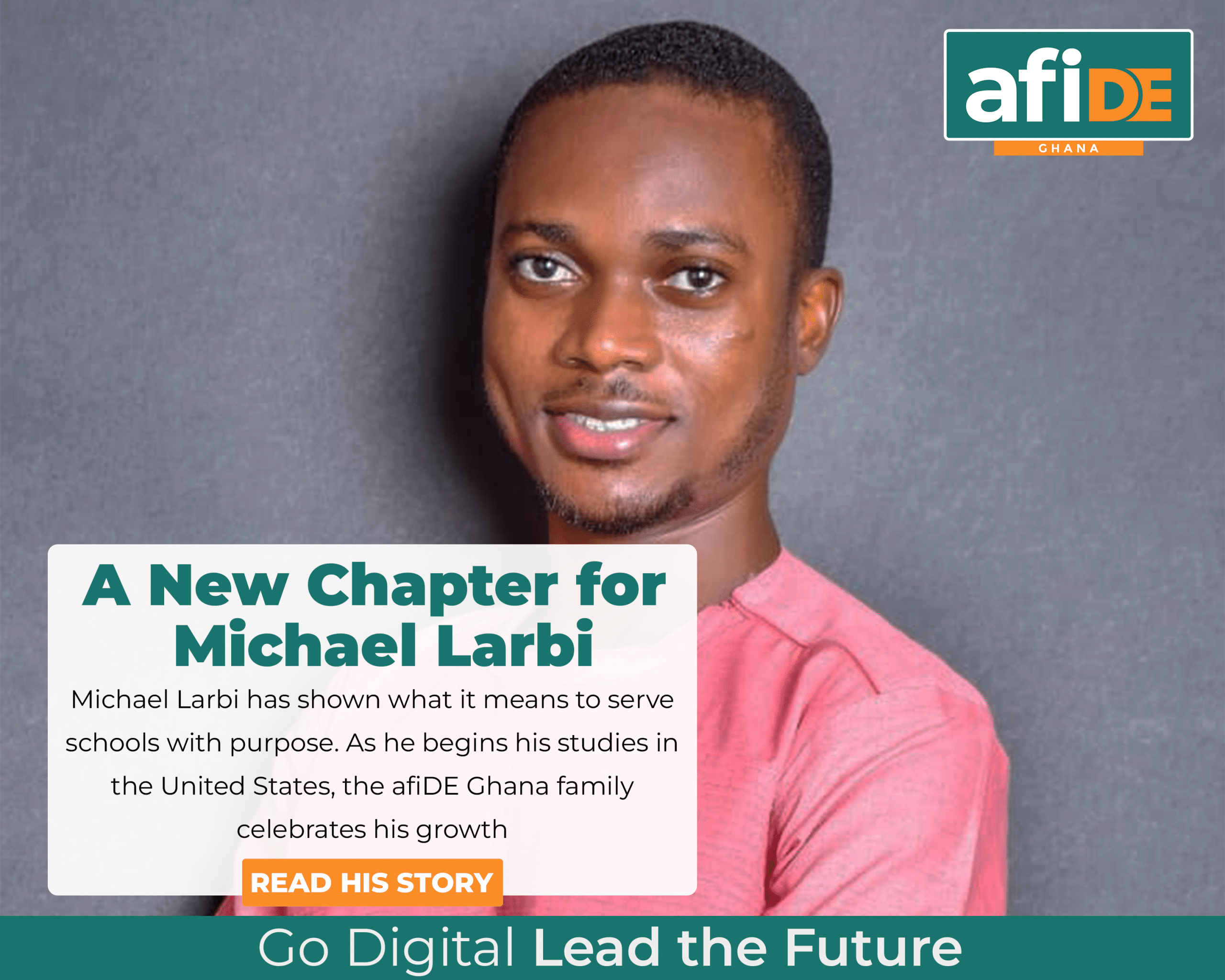
Michael Larbi Departs for Further Studies, With afiDE Ghana Fully Backing Him

Michael Larbi Departs for Further Studies, With afiDE Ghana Fully Backing Him

Michael Larbi Departs for Further Studies, With afiDE Ghana Fully Backing Him

Michael Larbi Departs for Further Studies, With afiDE Ghana Fully Backing Him.

At afiDE Ghana, our strength has always come from the people who show up, day after day, to make quality education more accessible for the schools we serve. Behind every partnership, every onboarding, and every relationship built with a member school, there is a team member whose dedication makes it possible. This week, we celebrate one of those people as he begins an exciting new chapter.

Michael Larbi, Sales Consultant at afiDE Ghana since 2024, departs this week for the United States to pursue further studies. It’s a moment we approach not with a sense of loss, but with pride, because Michael’s growth is, in many ways, afiDE Ghana’s growth too.

A Journey Rooted in Purpose

Since joining afiDE Ghana in 2024 as Digital Education Consultant, Michael has built a reputation defined by a quiet, consistent commitment to the schools and communities we serve. His role placed him at the very front line of afiDE Ghana’s mission, connecting with school leaders, understanding their needs, and guiding them toward solutions that would genuinely benefit their students and staff. It is not an easy role. It requires patience, listening, and an ability to build trust quickly and sustain it over time.

Michael did exactly that, and did it well. His relationship with member schools has been nothing short of top notch, marked by trust, responsiveness, and a genuine investment in their success.

 School administrators came to know him not just as a representative of afiDE Ghana, but as someone who understood their challenges and was invested in helping them find real solutions. Colleagues describe him as thoughtful, dependable, and always willing to go the extra mile, the kind of team member whose work speaks for itself long before he does.

In a relatively short time, he has made a great impact on the organization and the schools it supports. Many of the strong relationships afiDE Ghana enjoys with its member schools today carry his fingerprints, built through countless conversations, follow ups, and moments of genuine care that go beyond the transactional nature of sales. That is the kind of impact that outlasts a single role or a single season, and it is part of the foundation he leaves behind as he steps into this next phase of his journey.

His decision to further his education reflects that same spirit of growth and purpose. Rather than stepping away from the mission, Michael is stepping further into it, choosing to sharpen his skills and deepen his expertise so that he can bring even more value to the work ahead. It is a decision that speaks to his ambition, but also to his loyalty. He is not simply pursuing personal advancement. He is preparing himself to serve better.

“Investing in our people is investing in our future,” says leadership at afiDE Ghana. “Michael’s pursuit of further education is exactly the kind of growth we want to champion, for him, and for everyone who benefits from the work we do together. We have watched him grow into someone our schools trust and rely on, and we are excited to see what this next step will make possible.”

What This Means for afiDE Ghana

Organizations grow when the people within them grow. Michael’s journey is a reminder that professional development isn’t separate from organizational progress. It’s often the engine behind it. As he takes on new academic challenges in the United States, he carries with him the experience, values, and understanding he’s built here in Ghana, and he will continue to build on it there, sharpening the skills that will make him even more effective when he returns.

Member schools and partners can expect the same level of commitment and quality of service afiDE Ghana has always provided. The team remains fully engaged, and continuity of support is a top priority throughout this transition. No school member should feel a gap in the attention or responsiveness they have come to expect from afiDE Ghana.

And when Michael returns, he brings back with him not only the relationships and impact he built before he left, but new skills, new knowledge, and a fresh perspective that will help afiDE Ghana grow and serve its member schools even better. His journey today is an investment that the entire afiDE Ghana community will benefit from tomorrow.

In his exit interview, Michael reflected: “Having previously worked in a larger organization, I was surprised by how much a small team could accomplish at afiDE Ghana. We consistently delivered results by supporting one another and working together efficiently. This experience greatly improved my team collaboration skills and showed me the power of collective effort over team size.

A Send-Off, Not a Goodbye

As Michael begins this new journey, afiDE Ghana extends its heartfelt congratulations and best wishes. This is a moment to celebrate ambition, growth, and the courage it takes to pursue something bigger, values that sit right at the heart of what afiDE Ghana stands for.

We’re proud of you, Michael. Go well, grow boldly, and know that the afiDE Ghana family is cheering you on every step of the way, ready to welcome back all that you’ll bring home.

Give Your Child a Head Start: How Parents Can Bring Digital Education to Schools

Give Your Child a Head Start: How Parents Can Bring Digital Education to Schools

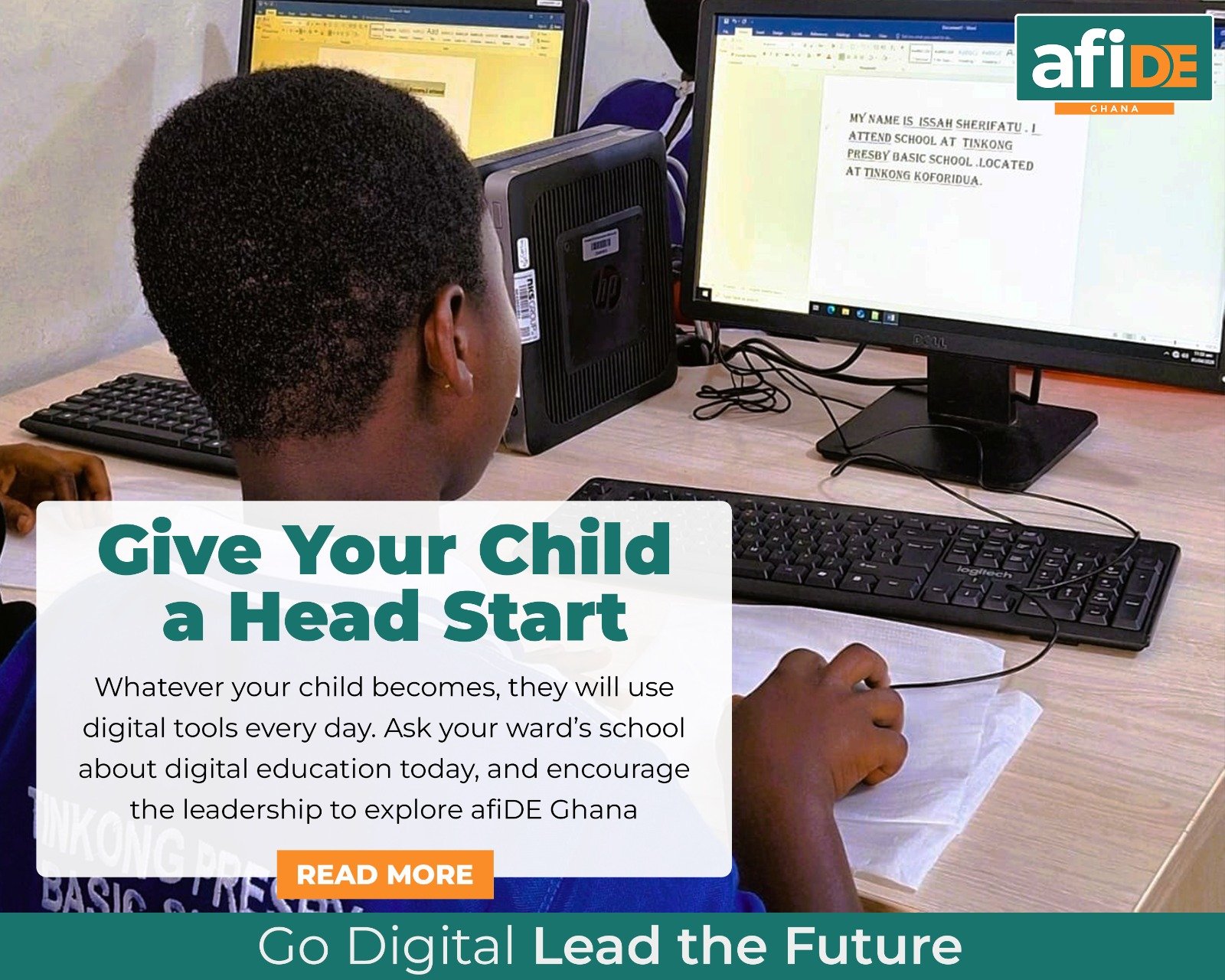
Think about the world your child will work in. Whether they become a doctor, an engineer, an entrepreneur, a farmer or an artist, they will use digital tools every day. The children who learn to use technology confidently and creatively will have a real head start. Those who don’t may struggle to catch up.

Digital education is now part of a good education, not an extra. As a parent, you have more influence over whether your child’s school offers it than you may realize.

What digital education really means

Digital education is not just children playing on computers. It means learners using technology to solve problems, create things, collaborate and think critically. A child who learns to code, research safely online, and present ideas with digital tools is building skills for life, not only for the next exam.

It also depends on more than buying computers. A lab with broken machines, no internet and untrained teachers helps no one. Digital education works when the equipment, the connectivity, the teachers and the school leadership all work together.

Why this matters for your child

  • Future readiness.Digital literacy is becoming a basic requirement for further education and for employment.
  • Better engagement.Children often learn more eagerly when lessons are interactive and hands-on.
  • Every child deserves access to technology, not only those whose families can afford devices at home.
  • Children who are comfortable with technology are more willing to explore, create and lead.

The challenge schools face

Most school leaders want to offer digital education. The obstacles are practical. Computers are expensive to buy, they break down, internet connections are unreliable, teachers need training, and someone has to maintain everything year after year. Many schools start a computer lab with good intentions, and within a short time half the machines no longer work.

This is where parents can help. When parents ask for digital education, schools take the request seriously.

A carefree solution: afiDE Ghana

afiDE Ghana is the Ghana chapter of the African Digital Education network, a member-based organisation of forward-looking schools preparing learners for the 21st century. It was set up as a social enterprise by 1A Computerlabs, with a clear purpose: to help schools offer digital literacy, bridge the technology gap, and give learners the skills and resources to thrive.

Its core offering is called Digital Education as a Service (DEaS). Instead of leaving a school to figure everything out alone, DEaS brings the essential pieces together:

  • 21 workstationsso a whole class can learn hands-on
  • 24/7 internetso learning is not limited by connectivity
  • Teacher trainingso educators are confident and equipped
  • Maintenance and replacementso the lab stays working
  • A Leadership Academyto develop school leaders who can drive digital change
  • An 8/5 help deskso problems are solved quickly

Beyond equipment, afiDE Ghana supports member schools through digital leadership development, peer learning and practical solutions that fit the Ghanaian context. Schools in the network learn from one another rather than working in isolation.

What you can do as a parent

You do not need technical knowledge to make a difference. Here are simple steps:

  1. Ask the school questions.Does it have a functioning computer lab? Is the internet reliable? Are teachers trained to teach with technology?
  2. Look for a plan, not just equipment.Ask who maintains the machines and what happens when something breaks.
  3. Raise it at PTA meetings.When several parents ask together, school leaders listen.
  4. Recommend a proven partner.Suggest that the school leadership explore afiDE Ghana and its Digital Education as a Service model.
  5. Choose wisely when picking a school.When comparing schools for your child, treat digital readiness as one of your criteria.

A small conversation that can change a school

Every school that embraces digital education started with someone asking for it. A parent’s question at the right moment can start a conversation that benefits hundreds of children for years.

Your child deserves an education that prepares them for tomorrow. Talk to your school’s leadership today, and encourage them to get in touch with afiDE Ghana.

Contact afiDE Ghana
Address: 8 Okudzan Avenue, Adjiringanor, Accra
Phone: 053 511 1599
Email: info@afide.network

Website: afide.network

WEEK

Going the Extra Mile for Digital Education – Happy Customer Service Week from afiDE Ghana

Going the Extra Mile for Digital Education – Happy Customer Service Week from afiDE Ghana

For us at afiDE Ghana, going the extra mile is not limited to what happens when a member school calls for support.

It is about building relationships, understanding the people we serve, anticipating their needs and, whenever possible, showing up for the moments that matter to them.

That is why this year’s Customer Service Week theme, “The Extra Mile,” resonates deeply with us.

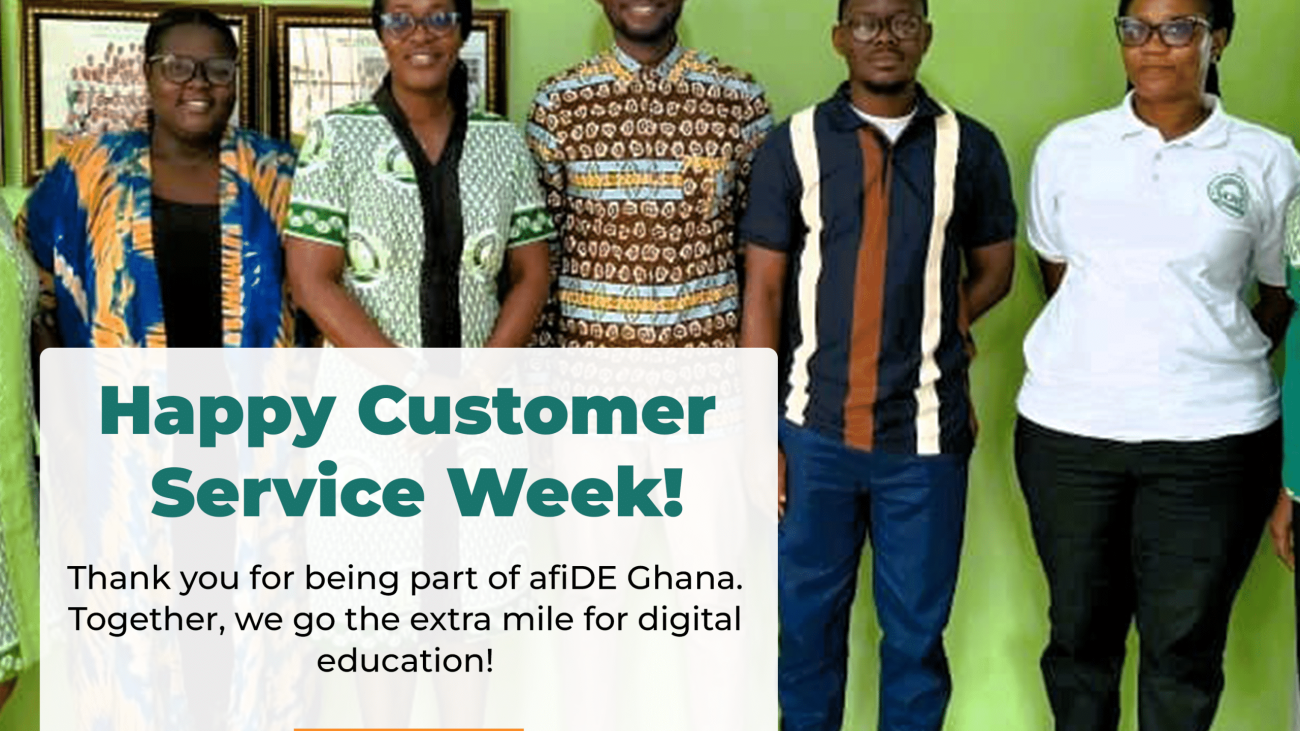
We want to pause this week to say thank you to our member schools who have welcomed us with open arms and allowed us to be part of not only their digital transition journey, but their wider school communities.


What does “going the extra mile” mean in digital education?

Customer Service Week is an annual celebration of the people who dedicate themselves to serving customers and creating better experiences. This year, the theme reminds us that exceptional service is not simply about resolving problems. It is about exceeding expectations, anticipating needs and leaving people better off than when they reached out.

In digital education, this matters even more.

A learner who cannot log in, find a resource or understand how to use a digital tool may simply give up. A learner who receives a quick, patient and clear response is much more likely to keep going.

For us, going the extra mile can mean:

Responding with patience: Treating every question, however small, as an opportunity to help someone keep learning.

Making things simple: Designing our support and guidance so that even first-time digital learners can feel confident.

Listening and acting: Taking feedback seriously and turning it into meaningful improvements.

Measuring what matters: Looking beyond the number of issues resolved to consider the experience and progress of the people we serve.


Zita Nyarko of afiDE Ghana at Nileem Academy's 3rd Graduation and Prize-Giving Day.
Zita Nyarko of afiDE Ghana at Nileem Academy’s 3rd Graduation and Prize-Giving Day.

Showing up for our schools

For afiDE Ghana, going the extra mile also means showing up.

Recently, our team joined Precious Jesus School, one of our member schools, as they celebrated their 20th anniversary. We have also had the privilege of attending graduation ceremonies at Nileem International School and Kharistar International Academy, among other milestones.

These moments matter to learners, teachers and families.

Being present to celebrate with them may not be part of a service ticket or a contractual obligation, but it is part of the kind of relationship we want to build with our member schools.

Service does not end at the help desk. Sometimes, service means showing up.


Why this matters for digital learning in Ghana

Ghana is increasingly placing digital education at the centre of its development agenda, but there is still considerable work to be done.

Our digital education journey has to take into account the realities of our schools, teachers, learners and communities. Access to devices and platforms is important, but so are digital skills, teacher confidence, infrastructure, ongoing support and the human connection that helps people embrace technology.

Ghana is also positioning itself to play a stronger role in Africa’s digital education conversation. The country is set to host the 18th eLearning Africa Conference in 2026, following an agreement between Ghana’s Ministry of Education and eLearning Africa.

As the conversation around digital literacy, artificial intelligence and the future of education grows, we must remember something fundamental:

Technology may open the door, but people determine whether others feel confident enough to walk through it.

That is where service matters.

The warmth, care and hospitality that are deeply valued in Ghanaian culture can also shape how we approach digital education. A welcoming experience can make technology feel less intimidating. A patient response can build confidence. A school that feels heard is more likely to engage, provide feedback and remain part of the learning community.


Service is part of the learning experience

The future of African education is not only about expanding access to technology. It is also about creating learning experiences that foster creativity, adaptability, problem-solving and confidence.

And quality of experience is inseparable from quality of service.

When learners, teachers, schools and partners know they can count on timely help, clear communication and a respectful response, trust grows.

That trust is what can turn a one-time interaction into a lasting relationship and a collection of schools into a genuine learning community.

The afiDE Ghana team visited Kwajen International School (KIS) as part of School Visitation Week.

A thank-you to the afiDE network

This week, above all, is a time to say thank you.

To every member of the afiDE network, thank you for being part of this community.

Your trust, questions, feedback, participation and even the challenges you bring to us shape the digital learning experiences we are working to improve.

And to the people behind the scenes who answer questions, solve problems, follow up, troubleshoot, train, coordinate and continue showing up for learners and schools:

Your work is what helps make digital education human.

At afiDE Ghana, we will continue to learn, listen, improve and, whenever we can, go the extra mile.


Together, we go the extra mile for digital education.

Happy Customer Service Week from afiDE Ghana!


WB2S

School Has Resumed: Are You Building Your Students’ Future, or Quietly Breaking It?

School Has Resumed: Are You Building Your Students’ Future, or Quietly Breaking It?

The school gates are open again. Classrooms are filling with excitement as students return with fresh hopes, new books and dreams for the academic year ahead. Teachers are back, ready to teach and inspire. School leaders are reviewing plans, setting targets and preparing their institutions for another year of growth.

But behind the excitement of a new term lies a harder, more uncomfortable question, one that most schools would rather avoid.

Are we preparing these students for the world they will graduate into? Or are we, without realising it, setting them up to fail in it?

It is not a dramatic question. It is a necessary one.

The Uncomfortable Truth

No school sets out to fail its students. No teacher walks into a classroom hoping to hold a child back. And yet, year after year, thousands of students leave school without the one set of skills that will determine, more than almost anything else, whether they can build a livelihood in the world ahead of them: digital skills.

This is not negligence in the way we usually think about it. Nobody is being careless on purpose. But there is a quieter kind of harm that happens when a system keeps doing what it has always done, in a world that has stopped waiting for it to catch up.

If a student graduates today unable to use a computer with confidence, unable to research online, unable to communicate or create digitally, that student is not neutral. They are behind. And the gap keeps widening every year technology moves forward without them.

So the question is not rhetorical. It is real: is your school building its students’ future, or quietly breaking it?

Good Intentions Are Not Enough

Here is where it gets uncomfortable for schools that believe they are already doing enough.

A school may have a computer lab. It may proudly tell parents it offers “ICT.” But if that lab sits locked most of the week because there is no trained teacher to use it, or because three of the ten computers work, or because nobody has a plan for what happens when the last one breaks down, that school is not preparing its students. It is performing preparation.

The equipment becomes a symbol rather than a tool. And a symbol does not teach a child how to build a spreadsheet, research a topic, or use a digital platform to reach a customer.

This is the trap: doing something that looks like progress while the actual outcome, a digitally capable graduate, never materialises. That gap between appearance and outcome is where futures quietly get broken. Not through malice. Through drift.

Teachers Are Either the Bridge or the Barrier

Students cannot become digitally confident if teachers are left behind. This is not a small detail. It is the whole equation.

Teachers are at the heart of every education system, and digital transformation must include them, not happen around them.

Ask honestly: are your teachers confident using digital tools, or are they quietly avoiding the computer lab because nobody ever showed them how? A school can install the newest equipment in the country, and it will still fail its students if the person standing in front of the class does not know how to use it.

This is where good intentions turn into broken promises. Providing computers without investing in teachers will not produce the desired results. It only shifts the burden onto teachers who were never given the tools to carry it, and onto students who inherit the gap.

Technology should never be seen as a replacement for teachers. It should be seen as a tool that empowers teachers to teach more effectively, to introduce new resources, to encourage research, to create more interactive lessons, and to offer learning experiences that go beyond the traditional classroom.

But that only happens with deliberate investment. A teacher who has never been trained cannot be expected to train students. So the real question every school must ask is this: are we building teachers who can carry students into the future, or are we leaving teachers to guess their way through it?

School Leaders Decide Whether This Becomes Real

The success or failure of digital education rests, more than anywhere else, on school leadership.

Digital transformation does not happen simply because computers are installed in a school. It happens when school leaders make digital education part of the institution’s vision, strategy and culture, not an afterthought handled quietly by an IT officer.

This is where leadership is tested. Not in the announcement of a new computer lab, but in the quiet, unglamorous decisions that follow it. School leaders must be asking themselves the questions that are easy to avoid:

  • What digital skills should our students actually have before they graduate?
  • Are we preparing our teachers to use technology, or simply hoping they figure it out?
  • Do we have a real plan for maintaining our digital infrastructure, or are we hoping it lasts?
  • How will we know if this is working, or if we are only telling ourselves it is?
  • Are we learning from other schools, or working in isolation and repeating the same mistakes?

These are not technical questions. They are leadership questions. And how a school leader answers them, honestly or not, will shape whether digital education becomes real or remains decorative.

This is why the work of afiDE Ghana is particularly relevant as schools begin a new academic year. afiDE Ghana is a network of schools committed to sustainable digital education. Its approach recognises that successful digital transformation requires more than equipment. It requires infrastructure, teacher development, maintenance, leadership and collaboration, built together rather than left to chance.

Through its Digital Education as a Service approach, schools in the network are supported with computer workstations, internet connectivity, teacher training, maintenance and replacement, and technical support, the ongoing work that most one time donations skip. The network already includes more than 50 schools, reaching more than 30,000 students, and has supported more than 600 teachers through professional development.

What “Breaking a Future” Actually Looks Like

It rarely looks dramatic. It looks like:

  • A bright student who could have built a career in tech, but never touched a computer meaningfully before graduating.
  • A teacher who wants to innovate but was never trained, so the syllabus stays exactly as it was ten years ago.
  • A school leader who sees technology as an IT department’s problem, not a leadership responsibility.
  • A community that celebrates a new computer lab at its opening, then forgets about it within a year.

None of these are acts of destruction in the way we usually picture the word. But the outcome is the same: a student walks out into a digital economy without the tools to participate in it. That is a stolen opportunity, even if nobody intended to steal it.

A New Term Is a Chance to Choose

Every new academic year is really a decision point, whether schools treat it that way or not.

This term, a school can continue on the same path it has always walked, hoping, without evidence, that its students, teachers and leaders will somehow rise to meet a digital future they were never equipped for. Or it can honestly confront the gap between what it is doing and what its people actually need, and start closing it.

The future of Ghana’s economy is sitting in classrooms right now, not in the abstract, but literally, in the students who resumed school this week, taught by teachers who are either being equipped or being left behind, in schools led by people who are either leading this change or avoiding it.

So ask the question plainly, without flinching: is your school building its students’ future, or quietly taking it away from them?

The answer will not come from a mission statement or a school motto. It will come from what happens in the classroom, the computer lab and the staff room, every single day this term.

Join afiDE Ghana, a growing network of schools committed to sustainable digital education. Choose to build, not drift. Equip your teachers, empower your leadership, and give every student a real chance at the future ahead of them.


IMG_0251.jpg

A New Chapter, A Steady Hand: Introducing Eric Kwesi Oppong, General Manager of afiDE Ghana

afiDE Ghana is entering a defining phase, marked by our transition into a memberdriven organisation and our enduring commitment to sustainable digital education nationwide. Leadership at this moment is not incidental; it is central to ensuring that our vision is carried forward with strength and stability.

Eric Kwesi OppongGeneral Manager - afiDE Ghana
Eric Kwesi Oppong General Manager – afiDE Ghana


We are therefore proud to announce the appointment of Eric Kwesi Oppong as General Manager of afiDE Ghana.

This is not simply a new name on our organisational chart. It is a deliberate investment in the management capacity, strategic direction, and institutional stability required to guide afiDE’s growth. It signals to our staff, member schools, partners, and stakeholders that afiDE Ghana’s next chapter is being built on solid ground.

Why this Appointment Matters

afiDE Ghana’s evolution into a member-based organisation is a structural transformation designed for the long term. It requires leadership that can balance two imperatives: preserving continuity with the values and relationships that brought us here, and scaling what comes next: deeper member engagement, stronger partnerships, and wider reach for digital education across Ghana’s schools.

Eric’s appointment is a strategic response to this demand. His background bridges educational leadership and business development, precisely the combination afiDE needs to manage growth responsibly while remaining rooted in our mission.

Knowing Eric

Eric Kwesi Oppong brings over a decade of experience in programme management, educational leadership, and business development. He has consistently built strategic partnerships and led teams to deliver measurable outcomes across Ghana and the United Kingdom.

Guided by UN Sustainable Development Goal 4, Eric directed the iReadilead Campaign, a nationally recognised initiative that established eight modern libraries and delivered literacy and STEM interventions reaching 24,000 basic school learners. His leadership has been recognised through prestigious honours, including the Chevening Scholarship and the GNPC Foundation Scholarship.

He holds an M.A in Education (Leadership and Management) from Oxford Brookes University and an MSc in International Business from the University of Ghana Business School, an academic foundation that mirrors the dual mandate ahead of him at afiDE Ghana: educational impact delivered through sound organisational growth.

“afiDE has built something genuinely valuable: a communityrooted approach to digital education that delivers real results. My focus as General Manager is to strengthen the systems and partnerships behind that work, so that as we grow into a member-based organisation, every school, teacher, and learner we serve feels the benefit of that growth. This is a shared journey, and I look forward to building it together with our members, partners, and team.” — Eric Kwesi Oppong, General Manager, afiDE Ghana.

Eric Kwesi OppongGeneral Manager - afiDE Ghana
Eric Kwesi Oppong
General Manager – afiDE Ghana


What This Means for you

afiDE Staff: Eric’s appointment strengthens the management foundation you work within every day. Expect clearer direction, dependable support, and leadership that understands both the education sector and the operational discipline required to grow an organisation well.

afiDE Members: As afiDE Ghana transitions to a member-based model, Eric’s role is to ensure that this shift genuinely serves you. His experience in building and sustaining partnerships means member voice and engagement will be a priority, not an afterthought.

Partners and Stakeholders: This appointment reflects afiDE Ghana’s commitment to longterm institutional strength. You are partnering with an organisation that invests deliberately in its leadership pipeline, a signal of stability and seriousness of purpose as we scale our shared work in sustainable digital education.

Looking Ahead

Eric’s appointment is one part of a broader story: afiDE Ghana building the leadership, structure, and member ownership needed to sustain its impact for the long term.

We are confident this is the right leadership for this moment, and we invite our entire community to join us in welcoming Eric Kwesi Oppong to afiDE Ghana.