Digital learning only works when the system behind it works.
Many schools in Ghana have attempted to go digital. Devices were donated, but the results did not last. Teachers were not adequately trained, internet access was unreliable, and when systems broke down, there was no support.
Today, only 22% of students in Ghana have basic ICT skills, a clear reflection of a system that was never properly built.
afiDE Ghana is changing that.
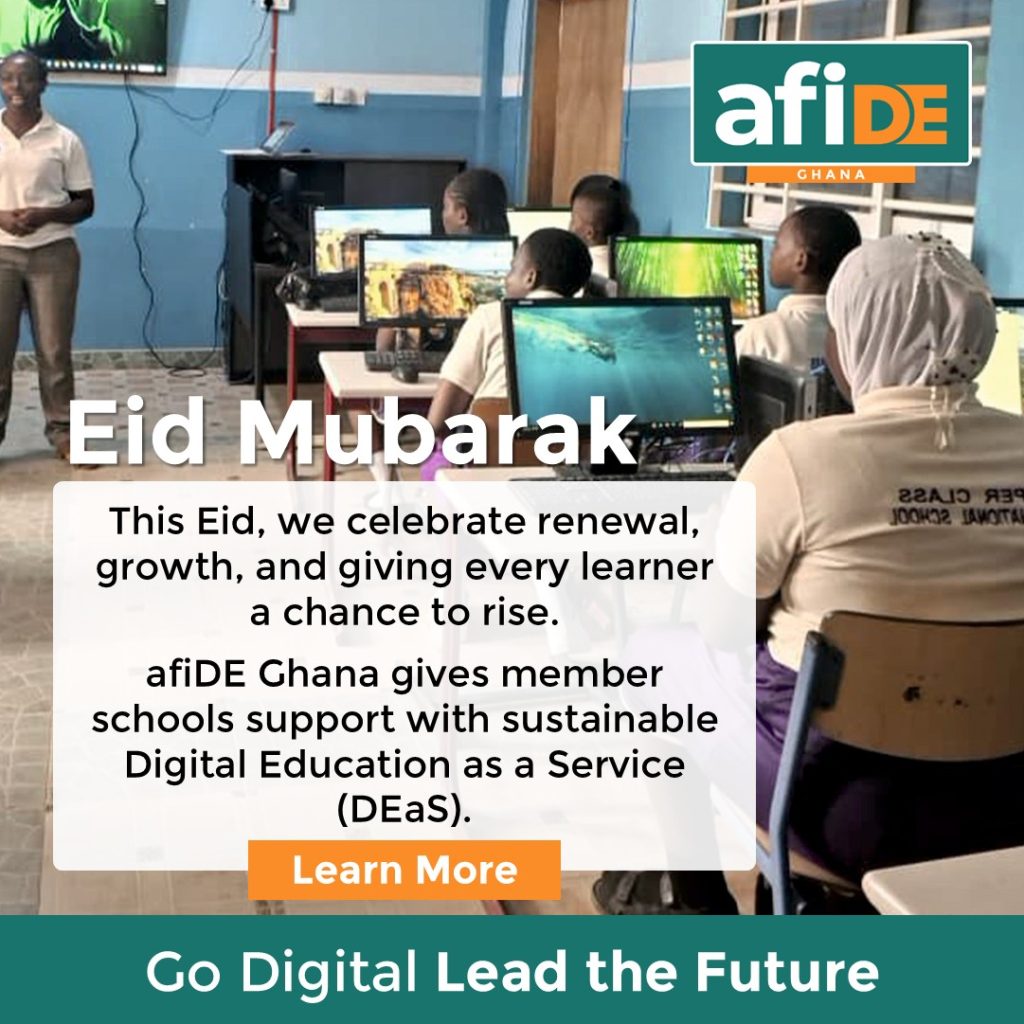
With Digital Education as a Service (DEaS), your school gets a complete, fully managed digital learning solution from a well-equipped computer lab and reliable internet, to trained teachers and continuous technical support. We handle the setup, maintenance, and support, so you can focus on teaching.
Public or private, every school that believes its students deserve better can benefit. Schools across Greater Accra, Eastern, and Volta Regions are already making the shift.
Young Coders, Real Impact: How JAY’S International School Is Shaping Ghana’s Digital Future
Digital education is not just about learning to code. It is about using code to say something, to solve something, and to inspire others to do the same.
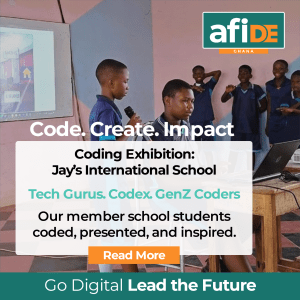
On 13th March 2026, we attended a Coding Exhibition at JAY’S International School, one of our member schools. Three coding clubs, Tech Gurus, Codex, and GenZ Coders, presented projects built on Scratch to a panel of experts from afiDE (African Digital Education network) Ghana and our Coding4Kids partner AmaliTech. The goal was simple: showcase their talent, get real feedback, and inspire other students to join.
Three Clubs. One Powerful Theme.
Tech Gurus, Codex, and GenZ Coders each presented an original project built on the Scratch platform. But what stood out to us was the theme all three clubs chose to address: sanitation.
Through animations and interactive storytelling, the students delivered powerful messages about cleanliness, proper waste disposal, and maintaining healthy environments, not in abstract terms, but using characters, settings, and everyday scenarios drawn from their own communities.
What impressed us most was how the students localised their content. They used familiar community settings and local examples to communicate their ideas, making the sanitation messages more relatable and meaningful, both to the audience and to themselves.
Skills on Display: Creativity, Teamwork, and Confidence
Across all three groups, here is what we observed:
A solid grasp of the Scratch coding environment and its core features
Teamwork and collaborative problem-solving in designing their projects
Confidence and clarity when presenting their work to an audience
The ability to connect coding with real-world issues, turning a technical skill into a communication tool
Creative storytelling that reflected both technical ability and social awareness
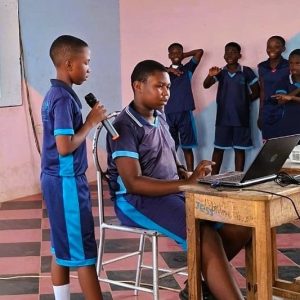
One of the clubs presenting their work during the exhibition.These are not just coding skills. They are the foundational skills of the digital economy, and this is exactly what we at afiDE Ghana are working to build in schools across the country.
More Than a Showcase: A Platform to Grow
What made this exhibition special was its purpose. It was not about picking a winner. It was about giving young coders a real audience, real feedback, and a real reason to keep going.
Our team, together with the panel from AmaliTech, engaged with each club directly, offering observations and suggestions to help them improve. For many of these students, this was their first time presenting their work to professionals outside the school. That experience alone is invaluable.
The exhibition also served a second purpose: inspiration. Seeing fellow students code, present, and be recognised is one of the most powerful ways to get other learners curious about coding. This is exactly the kind of culture we want to see growing in all our member schools.
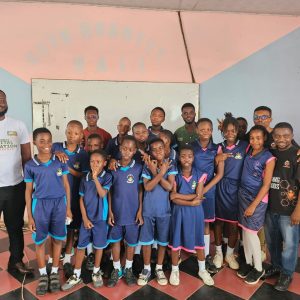
A group photo featuring the coders, the team from afiDE Ghana, the team from AmaliTech, and two Computing Facilitators from Jays International School.
Join the Coding4Kidsprogram
Ghana’s digital transformation depends on more than infrastructure. It depends on young people who can think digitally, create digitally, and solve problems digitally. What we saw at JAY’S International School on 13th March is exactly what our Digital Education as a Service (DEaS) model is built to make possible. Maintained labs. Trained teachers. Reliable internet. Continuous support. When all of that is in place, students do not just learn to code. They use code to make a difference.
We are calling on more of our member schools to organise coding exhibitions like this one. Give your students a platform. Invite professionals to give feedback. Let your coding clubs inspire the next group of learners. We are here to support you every step of the way.
Is your school ready to join our network and bring DEaS on board?
Read more about what DEaS can do for your school → https://afide.network/solution/#DEaS
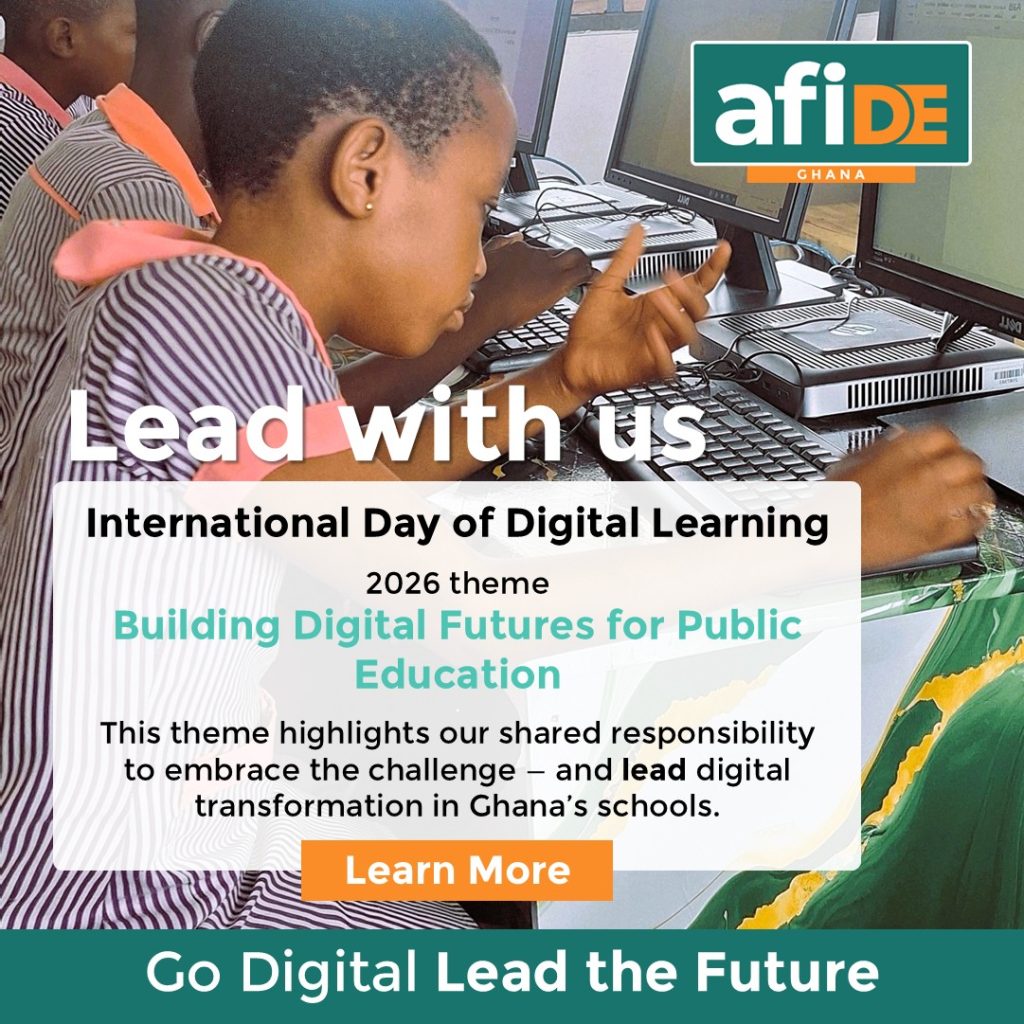
Today, we join partners around the world in marking the International Day of Digital Learning, guided by UNESCO’s 2026 theme:
Building Digital Futures for Public Education
For afiDE Ghana, this theme speaks directly to the heart of our work. Schools cannot build their digital future with tools alone. They need reliable infrastructure, professional management, continuous support, and leaders who can guide digital transformation with confidence.
This is why afiDE Ghana delivers to it’s member schools Digital Education as a Service (DEaS) — a sustainable, professionally managed model that ensures every school can access modern digital learning environments without the burden of owning, maintaining, or troubleshooting technology on their own.
International Digital Education Day 2026. Lead by UNESCO, UNICEF and ITU, supported by afiDE Ghana.
Digital Education as a Service (DEaS): A Sustainable Model for Schools
DEaS equips schools with everything required to make digital learning work — not once, but every day:
A stable, modern digital learning environment with one of our Computerlabs
Continual maintenance, updates, and professional support
Teacher development and coaching in digital pedagogy
Tools for data‑driven improvement
Long‑term financial and operational sustainability
With DEaS, schools benefit from services that function reliably, so teachers can teach, learners can learn, and leaders can focus on leading.
Digital Futures Depend on Digital Leadership
While infrastructure matters, technology alone cannot change a school. Leadership does.
This is why afiDE Ghana’s theme for 2026 is: Shaping Leadership of Digital Education.
Strong digital leaders are essential for:
Setting a clear digital vision
Supporting teachers in adopting new methods
Making informed decisions based on school data
Creating a culture where technology is used with purpose
Ensuring sustainability long after new systems are introduced
Our Leadership Academy, launching in 2026, strengthens these leadership capacities—ensuring every school that adopts DEaS also develops the leadership needed to make digital learning thrive.
A Shared Responsibility for the Future
“Building Digital Futures for Public Education” is not the task of a single institution. It is a shared responsibility across educators, communities, partners, and policymakers.
afiDE Ghana is honoured to support this national effort by providing the systems, services, and leadership development needed to help every school move confidently into the digital age.
Digital futures do not happen by chance. They are built. And they are led.
APPLY NOW to Become part of our 50+ member school organisation that leads the change for Digital Learning in Ghana
Download the flyer above and share it with your network to support International Day of Digital Learning 2026
afiDE Ghana Hosts International Women’s Day Dialogue for Female School Leaders
afiDE Ghana hosted a coffee dialogue for female school leaders at its office to mark International Women’s Day and open up an honest conversation about women’s leadership in education.
The two-hour event carried the theme “Women Leading Schools: Challenges, Opportunities and Collaboration.” It brought together female directors, headteachers, and administrators from afiDE Ghana member schools to share experiences, discuss the barriers they face, and explore practical ways to strengthen women’s leadership in schools.
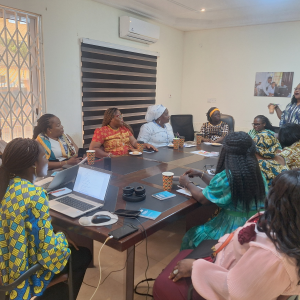
Female school leaders engaged in interactive discussions during the coffee dialogue hosted by afiDE Ghana to mark International Women’s Day
Nicole Odudu, Digital Education Manager at afiDE Ghana, moderated the dialogue and guided discussions throughout the session.
Brianna Dika, Service Manager at afiDE Ghana, opened the session and welcomed participants. She highlighted the role female leaders play in driving innovation in schools and expanding opportunities for girls in digital education.
The dialogue brought together female school leaders from across the afiDE Ghana network. They were Oko Magdalene A. of Magmount Zion International School, Erica Nyarkoa Akuramaa of Nsawam Presbyterian School, Dadzie Asmah Abigail of Curious Minds International School, Dorothy Parker Clarke of Kwabenya Senior High School, Fatima Sammo of West Legon Academy, Joyce T. Larkpleku of Fiakonya D/A Basic School, Mrs. Lydia Ghansah of Passion Home British International School, Favor Abena Ghanney of Precious Jesus School, and Patience Ntiamah-Ananga of Nileem Academy.
Challenges for Female School Leaders in Ghana
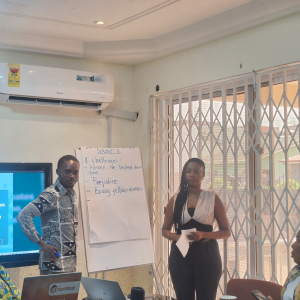
One of the female school leaders presenting findings from her group’s breakout discussion during the afiDE Ghana International Women’s Day dialogue
The discussions that followed were direct and grounded in real experience. Participants spoke about gender stereotyping and how some colleagues and parents make assumptions about women’s leadership abilities based on gender rather than competence. Several participants noted that men sometimes do not take female school leaders as seriously as they should.
Family life added another layer to the conversation. Some leaders said their male spouses show little trust or support for their leadership roles at school. Others shared that husbands sometimes expect to take charge of schools that families have established together.
The women also talked about how they manage these challenges day to day. Many said listening and patience are the tools they rely on most. Listening carefully and early helps them get to the root of a conflict before it grows. Treating teachers and parents fairly and without bias, they said, is what builds lasting trust and keeps cooperation within the school community strong.
Joyce Larkpleku delivered a spotlight presentation on women’s leadership in schools. She encouraged participants to support one another and to invest in mentoring younger female educators coming up behind them.
Women Supporting Women in Education commitment
The morning also had a memorable lighter moment. Participants played a game of charades, where players act out words or phrases without speaking, while others guess. It drew laughter, loosened the atmosphere, and became one of the highlights of the day.
The session closed with a “Women Supporting Women” commitment. Participants pledged to mentor other female educators, promote women’s leadership in their schools, and encourage girls to take up STEM and digital education.
Strengthening Women’s Leadership through Digital Education
Ghana is one of the African countries closest to achieving gender parity in education, with girls now matching or even surpassing boys in enrollment at several levels. In primary schools, women make up almost half of all teachers, a remarkable achievement that places Ghana among the stronger performers on gender equality in education across the continent. Yet this progress in the classroom has not yet translated into equal representation in leadership.
Female Leadership remains low
Across the education system, women remain a minority in leadership roles. Only 26% of secondary school teachers are women, and the share of female headteachers, principals, and senior administrators declines sharply as positions become more senior. Studies consistently show that cultural expectations, limited mentorship, and unequal access to leadership pathways continue to hold women back from decision making roles in schools, colleges, and universities. At the same time, education in Ghana is changing rapidly.
Development program with Women College of Education
Digital competence is becoming essential for teaching, school management, and institutional leadership. This is why afiDE Ghana, together with the Ghana Society of Education Technology, has developed a five year Digital Education Training Program to strengthen digital capacity in teacher education. The Minister of Education has endorsed the initiative and selected the Presbyterian Women’s College of Education in Aburi as the pilot institution — a meaningful choice, given the need to expand opportunities for women in leadership.
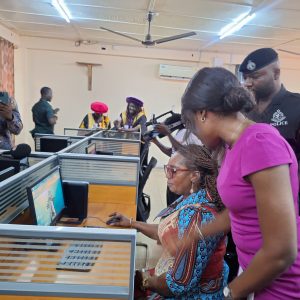
Eastern Regional Minister, Hon. Rita Akosua Adjei Awatey, exploring one of the newly installed computers in the Digital Education lab at PWCE,
Empowering women with strong digital skills is not only about technology. It is about confidence, opportunity, and visibility. When women lead schools and colleges, girls see what is possible. Representation shapes ambition.
International Women’s Day: Female Leadership in Education
To honour the women who carry Ghana’s education system every day, afiDE Ghana is hosting a Celebration of Women in Education on:
9 March, 1:00 PM
Invited: all female afiDE Ghana members — teachers, headteachers, administrators, and educators at all levels
The event will include a dialogue on women’s leadership in education, and every participant will receive a small gift in appreciation of her contribution.
Ghana has made impressive progress in girls’ education. The next step is ensuring that women are equally represented in leadership — and digital empowerment is one of the strongest tools to help close that gap.