
School Has Resumed: Are You Building Your Students’ Future, or Quietly Breaking It?
The school gates are open again. Classrooms are filling with excitement as students return with fresh hopes, new books and dreams for the academic year ahead. Teachers are back, ready to teach and inspire. School leaders are reviewing plans, setting targets and preparing their institutions for another year of growth.
But behind the excitement of a new term lies a harder, more uncomfortable question, one that most schools would rather avoid.
Are we preparing these students for the world they will graduate into? Or are we, without realising it, setting them up to fail in it?
It is not a dramatic question. It is a necessary one.
The Uncomfortable Truth
No school sets out to fail its students. No teacher walks into a classroom hoping to hold a child back. And yet, year after year, thousands of students leave school without the one set of skills that will determine, more than almost anything else, whether they can build a livelihood in the world ahead of them: digital skills.
This is not negligence in the way we usually think about it. Nobody is being careless on purpose. But there is a quieter kind of harm that happens when a system keeps doing what it has always done, in a world that has stopped waiting for it to catch up.
If a student graduates today unable to use a computer with confidence, unable to research online, unable to communicate or create digitally, that student is not neutral. They are behind. And the gap keeps widening every year technology moves forward without them.
So the question is not rhetorical. It is real: is your school building its students’ future, or quietly breaking it?
Good Intentions Are Not Enough
Here is where it gets uncomfortable for schools that believe they are already doing enough.
A school may have a computer lab. It may proudly tell parents it offers “ICT.” But if that lab sits locked most of the week because there is no trained teacher to use it, or because three of the ten computers work, or because nobody has a plan for what happens when the last one breaks down, that school is not preparing its students. It is performing preparation.
The equipment becomes a symbol rather than a tool. And a symbol does not teach a child how to build a spreadsheet, research a topic, or use a digital platform to reach a customer.
This is the trap: doing something that looks like progress while the actual outcome, a digitally capable graduate, never materialises. That gap between appearance and outcome is where futures quietly get broken. Not through malice. Through drift.
Teachers Are Either the Bridge or the Barrier
Students cannot become digitally confident if teachers are left behind. This is not a small detail. It is the whole equation.
Teachers are at the heart of every education system, and digital transformation must include them, not happen around them.
Ask honestly: are your teachers confident using digital tools, or are they quietly avoiding the computer lab because nobody ever showed them how? A school can install the newest equipment in the country, and it will still fail its students if the person standing in front of the class does not know how to use it.
This is where good intentions turn into broken promises. Providing computers without investing in teachers will not produce the desired results. It only shifts the burden onto teachers who were never given the tools to carry it, and onto students who inherit the gap.
Technology should never be seen as a replacement for teachers. It should be seen as a tool that empowers teachers to teach more effectively, to introduce new resources, to encourage research, to create more interactive lessons, and to offer learning experiences that go beyond the traditional classroom.
But that only happens with deliberate investment. A teacher who has never been trained cannot be expected to train students. So the real question every school must ask is this: are we building teachers who can carry students into the future, or are we leaving teachers to guess their way through it?
School Leaders Decide Whether This Becomes Real
The success or failure of digital education rests, more than anywhere else, on school leadership.
Digital transformation does not happen simply because computers are installed in a school. It happens when school leaders make digital education part of the institution’s vision, strategy and culture, not an afterthought handled quietly by an IT officer.
This is where leadership is tested. Not in the announcement of a new computer lab, but in the quiet, unglamorous decisions that follow it. School leaders must be asking themselves the questions that are easy to avoid:
- What digital skills should our students actually have before they graduate?
- Are we preparing our teachers to use technology, or simply hoping they figure it out?
- Do we have a real plan for maintaining our digital infrastructure, or are we hoping it lasts?
- How will we know if this is working, or if we are only telling ourselves it is?
- Are we learning from other schools, or working in isolation and repeating the same mistakes?
These are not technical questions. They are leadership questions. And how a school leader answers them, honestly or not, will shape whether digital education becomes real or remains decorative.
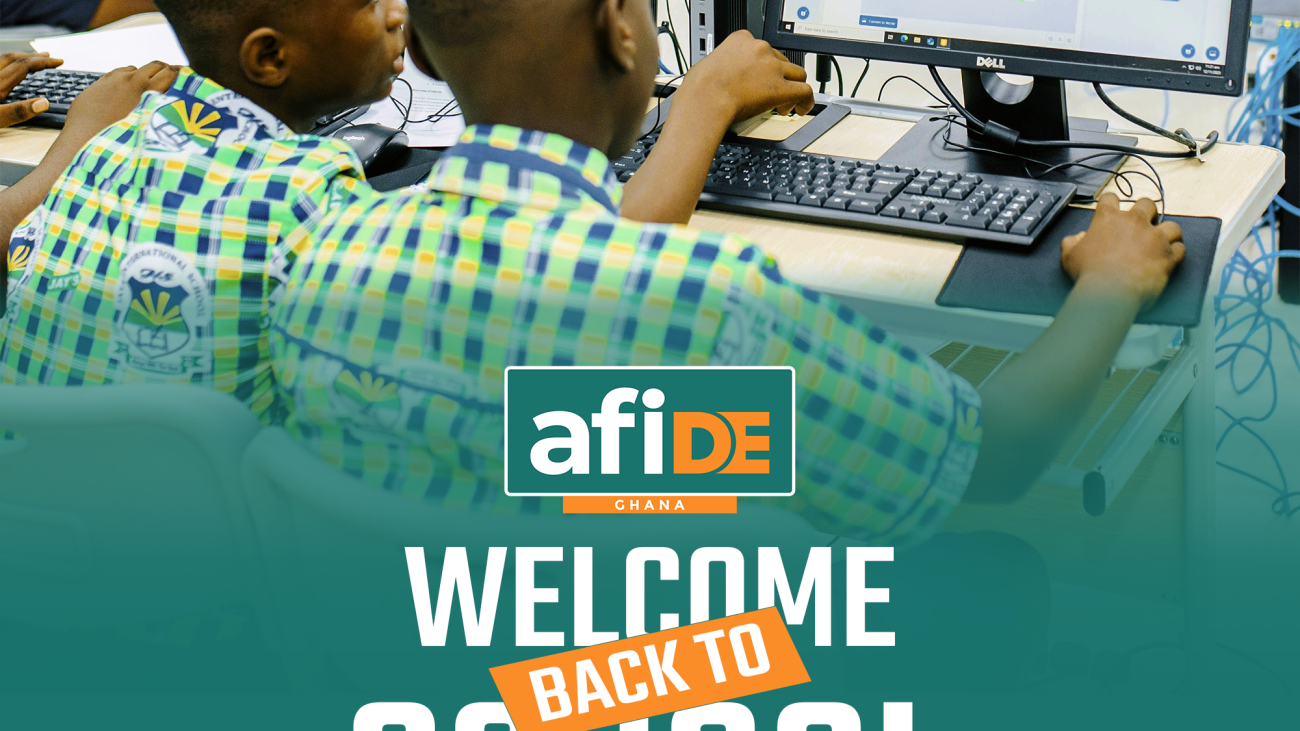
This is why the work of afiDE Ghana is particularly relevant as schools begin a new academic year. afiDE Ghana is a network of schools committed to sustainable digital education. Its approach recognises that successful digital transformation requires more than equipment. It requires infrastructure, teacher development, maintenance, leadership and collaboration, built together rather than left to chance.
Through its Digital Education as a Service approach, schools in the network are supported with computer workstations, internet connectivity, teacher training, maintenance and replacement, and technical support, the ongoing work that most one time donations skip. The network already includes more than 50 schools, reaching more than 30,000 students, and has supported more than 600 teachers through professional development.
What “Breaking a Future” Actually Looks Like
It rarely looks dramatic. It looks like:
- A bright student who could have built a career in tech, but never touched a computer meaningfully before graduating.
- A teacher who wants to innovate but was never trained, so the syllabus stays exactly as it was ten years ago.
- A school leader who sees technology as an IT department’s problem, not a leadership responsibility.
- A community that celebrates a new computer lab at its opening, then forgets about it within a year.
None of these are acts of destruction in the way we usually picture the word. But the outcome is the same: a student walks out into a digital economy without the tools to participate in it. That is a stolen opportunity, even if nobody intended to steal it.
A New Term Is a Chance to Choose
Every new academic year is really a decision point, whether schools treat it that way or not.
This term, a school can continue on the same path it has always walked, hoping, without evidence, that its students, teachers and leaders will somehow rise to meet a digital future they were never equipped for. Or it can honestly confront the gap between what it is doing and what its people actually need, and start closing it.
The future of Ghana’s economy is sitting in classrooms right now, not in the abstract, but literally, in the students who resumed school this week, taught by teachers who are either being equipped or being left behind, in schools led by people who are either leading this change or avoiding it.
So ask the question plainly, without flinching: is your school building its students’ future, or quietly taking it away from them?
The answer will not come from a mission statement or a school motto. It will come from what happens in the classroom, the computer lab and the staff room, every single day this term.
Join afiDE Ghana, a growing network of schools committed to sustainable digital education. Choose to build, not drift. Equip your teachers, empower your leadership, and give every student a real chance at the future ahead of them.